
Stress Survey Template
High stress levels can accumulate quietly in the workplace, and managers often miss the signs until it begins to affect team performance, attendance, and retention. Employees experiencing chronic stress rarely volunteer that information unprompted, particularly if they worry it will be viewed as a lack of capability. Supporting your team requires proactive, supportive check-ins to monitor wellbeing.
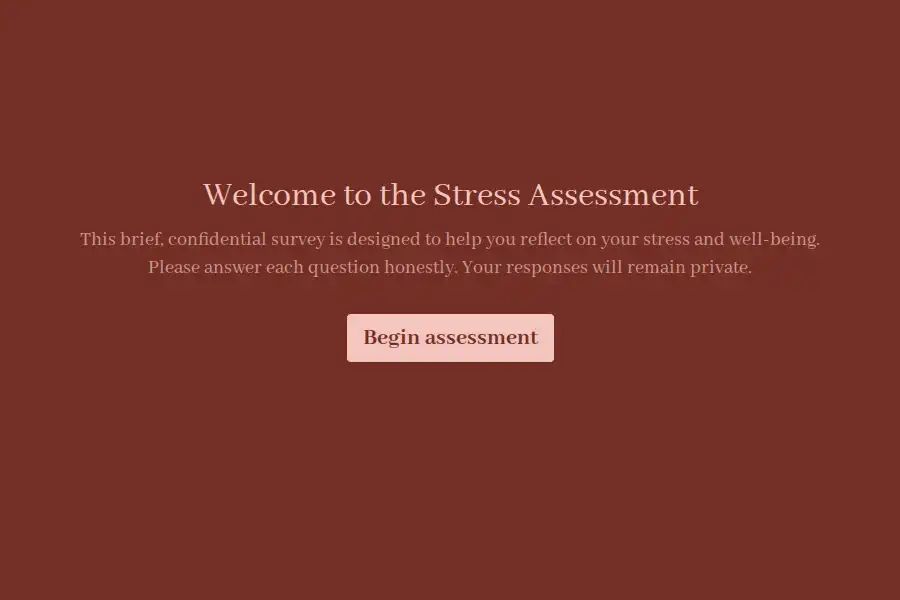
This stress survey template is designed to help organizations assess stress levels across teams with empathy and respect. By evaluating stress frequency, identifying main triggers, and tracking impacts on sleep and productivity, you can deploy the right support resources and make operational changes that preserve employee health.
Key Wellbeing Factors Measured in this Survey
This survey is organized into straightforward, digestible questions focused on personal and professional wellbeing:
- Stress Level Assessment: Uses a precise opinion scale to measure current self-reported stress levels.
- Triggers & Sources: Features multiple-choice selections to pinpoint the primary sources of stress (such as workload, personal changes, or financial concerns).
- Frequency Check: Tracks how often respondents feel overwhelmed by stress using multiple-choice options.
- Impact Scales: Employs opinion scales to evaluate how significantly stress is affecting their sleep quality and daily work productivity.
- Coping Mechanisms: Utilizes a multiple-choice question to identify what coping methods (such as physical activity, mindfulness, or peer support) respondents are currently using.
- Resource Connection: Features a simple yes/no question asking if they would like to receive information on company support resources.
- Qualitative Reflection: Includes an optional deep-dive field for sharing additional reflections on their experience with stress.
How to Support a High-Stress Team
- Deploy Workplace Support Resources: Use the yes/no resource interest check to automatically route employee assistance program (EAP) details, counseling benefits, or stress management workshops to team members who request them.
- Evaluate Workload Structures: If workload is identified as a primary stress trigger, work with team leaders to review project timelines, reallocate tasks, and ensure expectations are realistic.
- Normalize Wellbeing Conversations: Use aggregated, anonymous survey results to open a dialogue about wellness during team meetings. When leadership acknowledges stress openly, it reduces the stigma around seeking help.
Frequently Asked Questions
How does this survey protect employee health privacy?
This template does not collect personal identifiers, medical histories, or private details. It is designed as a high-level wellness check, and keeping it anonymous by default ensures employees can share stress concerns without worrying about professional consequences.
Why does the survey ask about sleep and productivity impacts?
Stress often manifests physically before it is recognized mentally. Tracking sleep disruption and productivity impacts helps organizations measure the severity of stress and build a business case for wellness programs.
What should we do if workload is the primary stress trigger?
If workload scores are high, evaluate your team’s resource allocation. Look at whether deadlines are realistic, if team members are working excessive overtime, or if process documentation is unclear, and take steps to adjust these operational factors.
How often should we run a team stress survey?
Running a wellness check-in quarterly or bi-annually works best, especially during high-pressure cycles like end-of-year periods, busy quarters, or major organizational transitions when stress levels typically spike.