
Learning and Development Survey Template
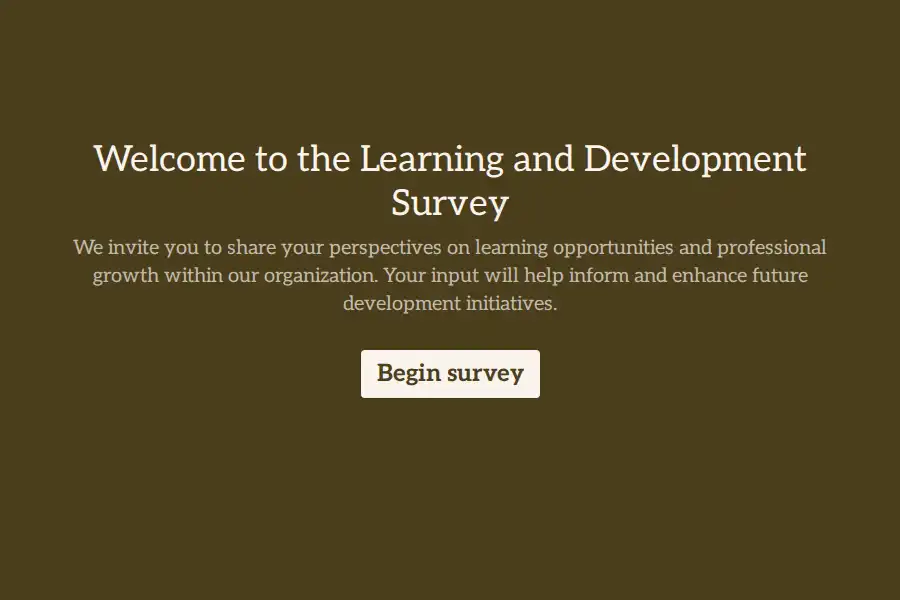
Designing corporate training programs without employee input often leads to low engagement, skipped sessions, and wasted budgets. Employees are best positioned to tell you which skills they need to master, where they face daily challenges, and how they prefer to learn. This learning and development (L&D) survey template provides HR and talent development teams with a direct channel to collect employee feedback regarding their growth priorities.
By gathering data on training satisfaction, preferred formats, and participation barriers, you can design highly effective, employee-driven development plans that improve engagement and performance.
Key L&D Insights Captured by the Survey
This survey captures key data points regarding employee satisfaction, learning habits, and career growth priorities:
- Employee Profile: Records the participant’s current role or department, alongside their tenure with the organization, to help group responses.
- Satisfaction Levels: Measures employee satisfaction with your current learning opportunities using a clear rating scale.
- Learning Preferences: Identifies preferred training formats, including multiple-choice options for video courses, workshops, or self-paced study.
- Target Development Areas: Asks employees to select the top professional skills they are most excited to develop.
- Participation Obstacles: Features open-ended questions to discover the main barriers—such as busy schedules or lack of resources—that make it difficult to participate in training.
- Frequency and Value: Gathers feedback on how often employees want to participate in training and asks for suggestions to make development programs more valuable.
Overcoming Common Barriers to Employee Learning
One of the most valuable sections of this survey is identifying what prevents employees from participating in training. If a large number of employees report that tight daily schedules are their main barrier, shifting from long workshops to short, self-paced learning modules can help improve completion rates.
To ensure honest and highly useful feedback, distribute the survey annually or ahead of your planning cycle. Explain to employees that their input will directly shape the training budget and learning resources provided over the coming year.
Building Data-Driven L&D Strategies
Once completed, compile the survey results to identify clear trends by department. If your sales team requests soft skills training while engineering prioritizes technical workshops, you can customize your L&D offerings to match these needs, ensuring a much stronger return on your training budget.
Frequently Asked Questions
What is a learning and development survey?
A learning and development survey is an internal questionnaire used by HR and L&D teams to gather employee feedback regarding training satisfaction, skill gaps, preferred learning formats, and growth goals.
Why should we survey employees before planning training?
Surveying employees ensures your L&D budget is spent on programs that address real, documented skill gaps and are delivered in formats your team actually enjoys, leading to much higher adoption and engagement.
How often should we run this L&D survey?
Running this survey once a year is standard for most organizations to align with budgeting. However, running shorter follow-up surveys after major training initiatives helps you track progress and make quick adjustments.
How can we encourage employees to prioritize learning?
Use the survey feedback to address their main barriers, such as providing dedicated learning hours during the workweek. Showing employees that you act on their feedback is the best way to build a strong learning culture.
Can we use these survey results for individual career planning?
Yes. The skill priorities and development goals shared by employees in this survey provide a perfect starting point for managers to build personalized development plans during annual reviews.