
Psychological Safety Survey Template
Psychological safety is the foundational element of any high-performing team, yet it is often difficult for managers to measure. In a workplace where team members do not feel safe asking for help, admitting mistakes, or challenging ideas, innovation stalls and critical errors go unreported out of fear of blame. To build a highly collaborative culture, you must actively track and nurture team trust.
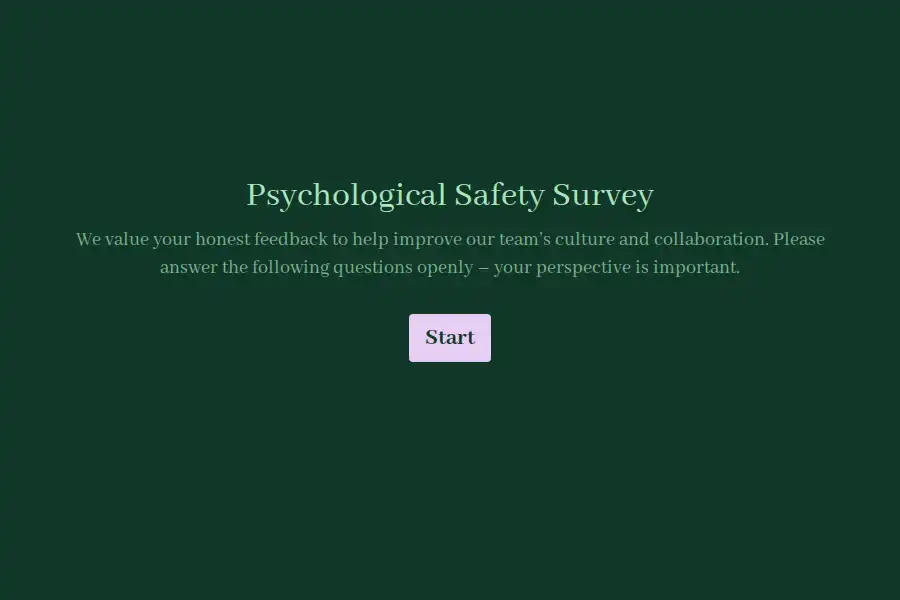
This psychological safety survey provides managers and HR leaders with a structured diagnostic tool. By collecting comfort ratings on speaking up, mistake handling, and diversity of perspectives, you can identify and resolve cultural friction before it impacts productivity and team morale.
Safety & Trust Pillars Measured in this Survey
This survey collects feedback on key aspects of interpersonal safety and team culture:
- Team Context: Captures the respondent’s department and tenure to help associate safety patterns with specific team sizes or environments.
- Constructive Disagreement Scale: Employs an opinion scale to measure comfort levels when disagreeing with teammates or managers.
- Error-Handling Comfort: Rates how constructively mistakes are handled within the team using a clear scale.
- Value of Perspectives: Gauges if different team members feel their unique skills and perspectives are genuinely valued.
- Safe Risk-Taking: Evaluates comfort levels with asking for help and sharing new, unformed ideas without fear of judgment.
- Feedback Frequency & Openness: Uses multiple-choice and deep-dive fields to identify how often team members hold back their thoughts and what factors help them feel safe contributing.
- Actionable Support: Reserves space for qualitative suggestions on what changes would build a more psychologically safe workspace, and includes a voluntary follow-up email opt-in.
Practical Strategies for Improving Psychological Safety
- Refrain from Assigning Blame: If the survey reveals low ratings for constructive error handling, lead by example. When a mistake occurs, focus the team discussion on process adjustments rather than individual blame.
- Actively Welcome Dissent: If comfort with disagreement scores are low, structure your meetings to actively invite alternative perspectives. Ask: “What are we missing here?” or “What is the counter-argument?” to normalize healthy debate.
- Encourage Vulnerability from Leadership: Share your own development goals and admit when you do not have all the answers. When leaders show vulnerability, it signals to the rest of the team that asking for help is a strength, not a weakness.
Frequently Asked Questions
What is psychological safety in the workplace?
Psychological safety is the shared belief that a team is safe for interpersonal risk-taking. It means team members feel comfortable speaking up, sharing ideas, asking questions, and admitting mistakes without fear of embarrassment, rejection, or retribution.
Why is anonymity critical for a psychological safety survey?
Employees who feel unsafe are highly unlikely to share that feedback if their name is attached to the survey. Keeping the survey anonymous by default encourages candid, honest feedback, which is essential for identifying team-level trust issues.
How should managers discuss psychological safety results with their teams?
Review the results as a group in a supportive, collaborative setting. Acknowledge areas where safety scores are lower, focus on collective process fixes rather than finding out who answered what, and agree on simple team norms that support open communication.
How often should we track team psychological safety?
Tracking safety quarterly or bi-annually is highly effective. Regular assessments help you measure how organizational restructures, project stress, or leadership changes impact team trust over time.