
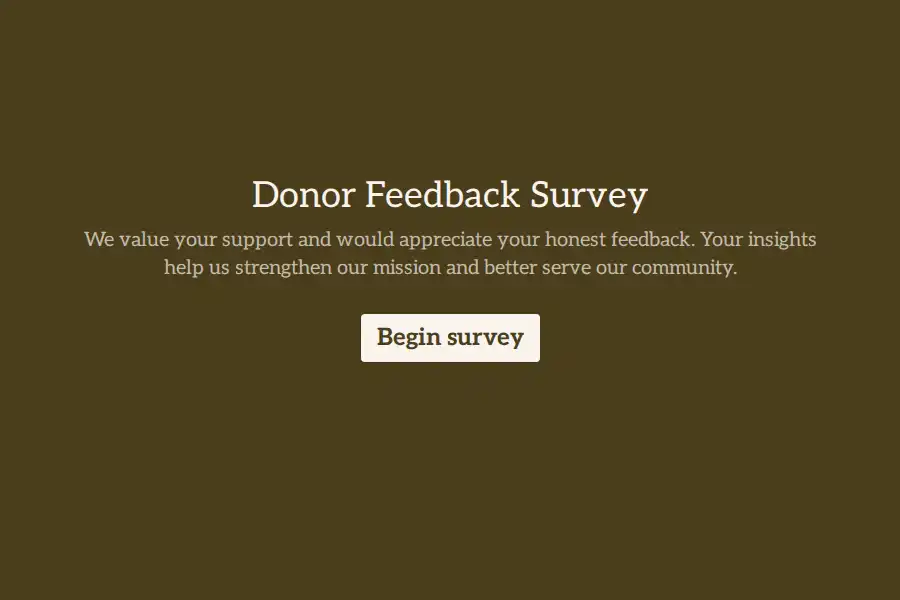
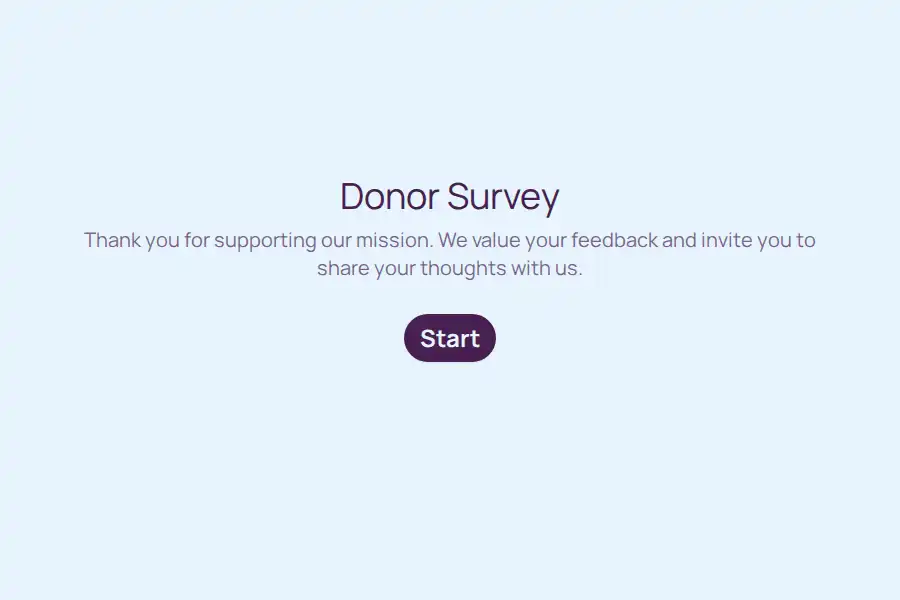
Donor Feedback Survey Template
The most fragile hours of a donor relationship are the ones immediately after the gift — and almost nothing in a nonprofit’s calendar is scheduled there. The donor has just done a generous thing and is waiting, usually without admitting it, for evidence that it mattered: a receipt that arrives before doubt does, a thank-you that sounds like a person, and eventually some word of what happened. When the evidence comes, the second gift is already forming. When it doesn’t, no appeal — however clever — competes with the silence. Attrition in fundraising is overwhelmingly an experience problem wearing a money costume. This survey audits the experience directly: it asks donors how the giving journey actually felt, moment by moment, after a specific campaign.
The Journey, Checkpoint by Checkpoint
Structure the survey along the path every gift travels, and rate each checkpoint on its own rating scale:
- The act of giving. Was donating easy — the page loaded, the form made sense, the amount options helped rather than pushed? Friction here doesn’t generate complaints; it generates people who never finish, and the ones who push through remember the struggle.
- The receipt. Did it arrive promptly, and did it contain what they needed — amount, date, tax information where relevant? The receipt is a legal document and a reassurance at the same time; failures here are felt disproportionately.
- The thank-you. Did anyone actually say it, and did it feel written by a human? This is the moment donors describe years later — in both directions.
- The impact report. Did they ever learn what their gift did? Expect this to be your lowest score — see below.
- The rhythm since. Too many asks, too few, or about right? This single question diagnoses the fatigue that masquerades as donor indifference.
One open comment field closes the survey: anything you’d want us to know about giving to us? Read these verbatims aloud at a team meeting — they are the most honest communications audit you will ever receive for free.
The Finding to Expect: Impact Silence
Run this survey and brace for one recurring result: donors gave and never heard what happened. Not because organizations don’t care — because impact reporting has no owner, no deadline, and no slot in the campaign calendar, which by design ends at the receipt. The fix is unglamorous and powerful: a single plain-language message, weeks after the campaign, saying what was achieved. It converts your survey’s worst score into your most defensible improvement, and it is the change most likely to show up in next year’s retention numbers.
The Service-Recovery Route
Some respondents don’t want a survey — they want a conversation. When a donor rates the experience poorly or requests contact, route it to a human immediately through instant notifications rather than letting it file itself into the quarterly report. For major donors especially, a personal call within days repairs more than any polished email ever will, and the survey has effectively handed you the opening line. Where the feedback concerns a failure — a botched receipt, a tone-deaf ask — the recovery conversation is also your apology, and it should be allowed to be one.
Wave Over Wave, Not Once
A single survey measures a mood; repeated waves measure improvement. Send the survey two to four weeks after each major campaign — late enough for the full experience to have unfolded, early enough to be vivid — and duplicate the form each time so identical questions make the trend honest. Did the receipt fix move the checkpoint score? Did the impact email lift the reporting rating? The response records hold the answers as a series, and a rising line is the evidence that keeps leadership funding the fixes. Respondents who opt in for the summary become your standing panel for testing next campaign’s changes.
This template serves the feedback template collection and the feedback sub-category, applies the service-recovery logic from the customer satisfaction playbook to the giving relationship, and pairs with measurement tools like the CSAT calculator. The giving-side instruments it complements live in the donation templates.
Frequently Asked Questions
What is a donor feedback survey?
A structured evaluation of how giving to your organization actually felt — the donation process, the receipt, the thanks, the impact reporting, and the communications rhythm afterwards. Where research surveys explore who donors are, this one inspects what you did to them, checkpoint by checkpoint, usually after a specific campaign.
When should we send it?
Two to four weeks after the campaign closes. Earlier, and the impact chapter hasn’t happened yet — you’d be measuring a story half-told. Later than a month or two, and the friction moments blur while everything flattens to fine, I suppose. For recurring giving programs, an annual feedback wave keyed to the renewal moment works well.
A major donor left critical feedback. What now?
Call them, personally, within days — not a form email, not a delegation to the most junior available person. The survey did you a favor: major-donor dissatisfaction that arrives via a feedback form is dissatisfaction you can still fix, which is far better than the version that arrives via a declined renewal. Thank them for the candor, fix what’s fixable, and tell them what changed. Handled this way, a critical response often deepens the relationship.
Should donors be able to respond anonymously?
Offer identification but don’t require it — the honest middle path. Anonymous feedback still surfaces systemic problems, but the service-recovery route only works when a name rides with the response, so make attaching one easy and explain exactly what it enables: leave your email if you’d like us to follow up personally. Donors choose based on what they want to happen next, which is precisely the information you want.
What do we do with the results beyond fixing the top score?
Run the loop in three layers. Fix the systemic issue — own the impact report, smooth the receipt. Close the loop with respondents, because a short you told us, we changed it message converts survey-takers into repeat survey-takers. And write the findings into the next campaign’s plan, so the experience checkpoints get owners and deadlines before the campaign starts instead of apologies after it ends. A survey that changes the plan is worth running; one that changes a slide deck is not.