



Evaluate Professional Behaviors and Styles Objectively
Resumes detail what a candidate has done in the past, and interviews highlight how well they can discuss their achievements. However, understanding how a candidate actually thinks, makes decisions, and handles workplace challenges requires a more structured approach. Psychometric assessments provide standard, comparable datasets that help hiring managers look beyond their first impressions to evaluate a candidate’s behavioral tendencies and cognitive preferences.
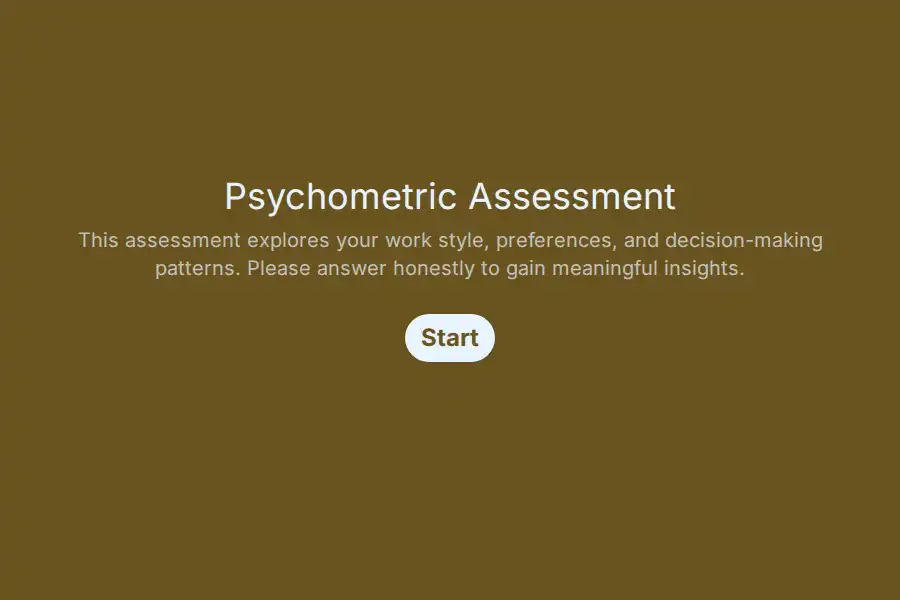
This psychometric test template offers a clean, non-intimidating candidate experience. By displaying prompts one at a time, it helps reduce test anxiety and keeps candidates focused on answering honestly. Because the test can be integrated directly with your applicant tracking system (ATS) or internal databases, you can place these behavioral insights directly alongside traditional resumes and interview evaluations.
The Role of Psychometric Appraisals in Modern Hiring
Structured behavioral assessments help organizations reduce hiring bias and identify candidates whose working styles align with the daily demands of a role.
- Minimizing Unconscious Bias: Standardized questions ensure every candidate is evaluated against the exact same metrics, rather than relying on an interviewer’s subjective rapport.
- Improving Role Alignment: A candidate might possess excellent technical skills but struggle in environments with high ambiguity. Psychometric patterns clarify these working preferences upfront.
- Enhancing Candidate Experience: Clunky, outdated testing software can frustrate top-tier talent. A clean, mobile-responsive layout conveys a modern, professional employer brand.
Key Professional Traits Captured by the Template
This template uses a series of carefully selected behavioral and scenario-based questions to construct a comprehensive candidate profile:
- Work Environment and Motivation: Evaluates whether a candidate thrives in collaborative, fast-paced teams or prefers independent environments, and identifies what drives their professional commitment.
- Decision-Making and Problem Solving: Prompts examine whether a candidate relies primarily on analytical data or intuitive consensus when making critical decisions.
- Response to Challenge and Ambiguity: Using scales and multiple-choice scenarios, the form assesses how comfortably a candidate handles unexpected setbacks and vague directives.
- Communication and Feedback Preferences: Captures how candidates express their ideas and how they prefer to receive constructive criticism from leadership.
- Narrative Self-Reflection: A deep-dive text field prompts candidates to describe a real-world scenario where they felt highly effective, providing qualitative context to support their quantitative selections.
Best Practices for Implementing Psychometric Assessments
When using psychometric tools, transparency is key. Inform candidates early in the process about why you use these assessments and how the data will be utilized. These evaluations should never be the sole basis for a hiring decision; instead, treat them as a reliable guide to highlight areas for deeper exploration during the face-to-face interview process. Sharing a summary of the findings with candidates can also build goodwill and elevate your employer brand.
Frequently Asked Questions
What is a psychometric test form?
A psychometric test form is a standardized evaluation tool used to measure psychological attributes, such as behavioral tendencies, communication preferences, and cognitive styles. In professional settings, these forms provide structured, objective data to help hiring teams evaluate role alignment.
Why should I use a psychometric assessment instead of standard interviews?
Interviews are highly subjective and prone to rapport-based biases. Psychometric tests offer a standardized baseline, ensuring every applicant answers identical questions. This helps you compare working styles and problem-solving preferences consistently across your entire candidate pool.
How long should a candidate assessment take?
An initial behavioral or situational assessment should ideally take between 10 and 15 minutes to complete. This template is designed to keep candidates moving smoothly through questions without causing cognitive fatigue, ensuring a high completion rate.
Can I connect this template to our applicant tracking system (ATS)?
Yes. You can route completed test responses directly to popular applicant tracking systems or databases using integrations. This allows recruiters to view behavioral results directly inside the candidate’s existing application file.