
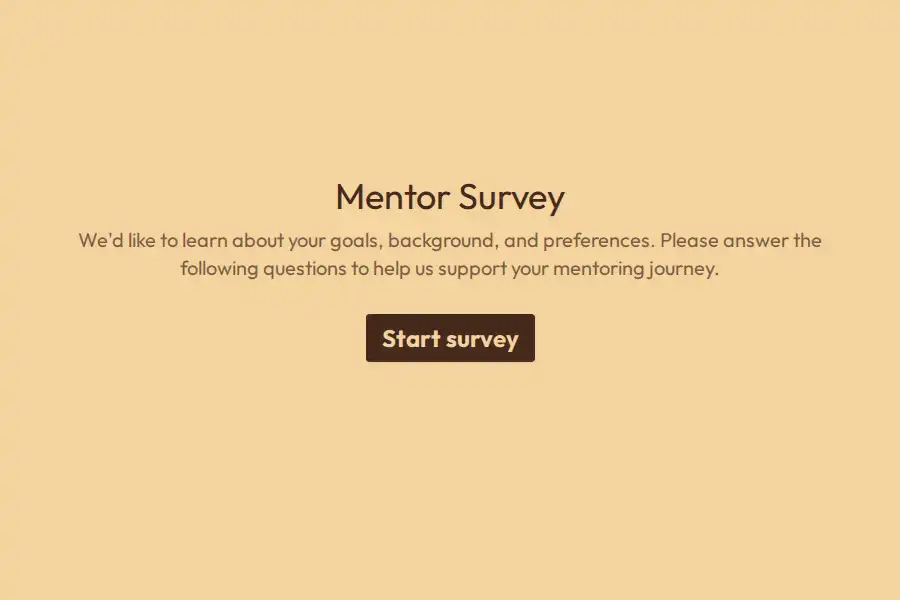
Learning Survey Template
Most curriculum problems are visible before day one — they just haven’t been asked about yet. A cohort of mixed skill levels, unrealistic weekly hour expectations, or a mismatch between preferred formats and planned delivery will sink completion rates that no amount of polished content can rescue. A learning survey catches these conflicts during course design, when they are still cheap to fix.
Design Decisions This Survey Informs
Every question maps to a concrete planning choice:
- Skill baseline. A multiple choice question — beginner, intermediate, advanced — determines whether you need a foundation module or can skip one.
- Format preferences. A dropdown question covering video, reading, live workshops, or hands-on projects tells you which delivery mix to weight.
- Weekly availability. A number question asking realistic study hours per week is the honest denominator for your whole schedule. A cohort with four hours cannot absorb a syllabus built for ten.
- Goals. Open responses about what each person wants to do with the skill — certification, career change, a specific project — let you sequence topics around outcomes people actually care about.
- Obstacles. Past attempts that failed, and why. This is where you learn that half the group stalled last time on exactly the topic you planned to rush.
Turning Profiles Into a Syllabus
Aggregate the responses and patterns emerge fast: maybe 60% are beginners, most can only study evenings, and video beats text two to one. Those three facts reshape the entire course plan before a single lesson is recorded.
For respondents who want help, a follow-up opt-in question works well — and with recall information, any later communication can reference their stated goals by name, so “resources for your Excel certification goal” lands as personal, not mass-sent.
This intake format pairs naturally with structured onboarding — see the training onboarding templates for the follow-up sequence.
Frequently Asked Questions
When should learners complete this survey?
At registration, or in the confirmation email afterward — but always before content decisions are final. A survey returned after the syllabus is locked is just trivia.
What if responses conflict with the planned curriculum?
That is the survey doing its job. If a cohort’s baseline sits well below your assumptions, add a primer week; if availability is thinner than expected, split one dense module into three short ones. Adjusting now costs hours; adjusting mid-course costs completions.
How do I keep the survey short enough to finish?
Six to eight questions max, mixing quick picks with one or two open prompts. You need signal, not a biography — save deeper diagnostics for week one of the course itself.
Does this work for corporate training programs?
Especially well. HR and L&D teams use it to scope employee skill levels and time budgets before committing budget to off-the-shelf or custom training.