
Ask Graduates How They Want to Belong
A database records who graduated. It says nothing about who would host a reunion table, mentor a final-year student, sit on a careers panel, or eventually remember the institution in their estate planning. Institutions pour outreach into the entire list and wonder why a fraction responds — because the list contains a reunion crowd, a mentoring crowd, a giving crowd, and a large group that simply wants a quieter connection.
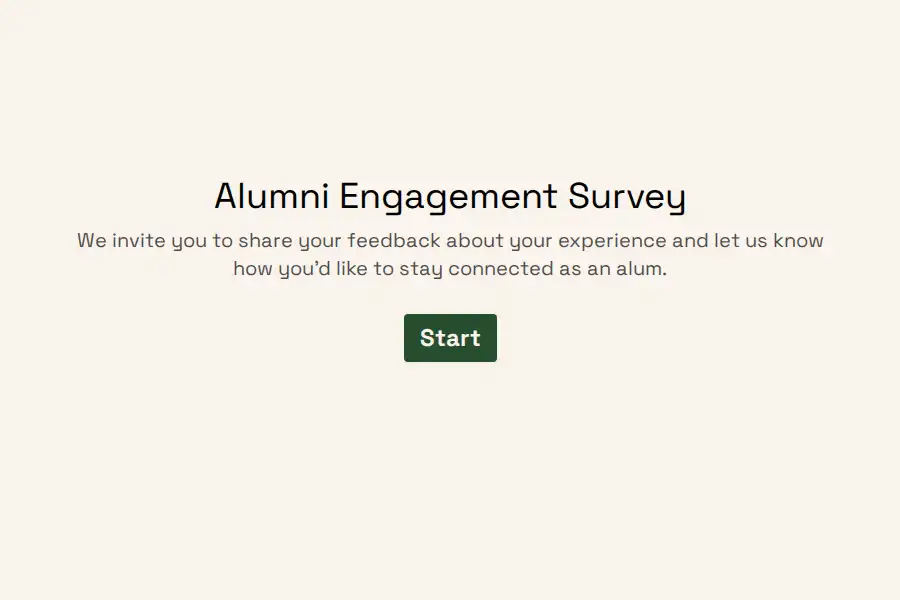
This alumni engagement survey asks which crowd each graduate belongs to. Instead of broadcasting the same invitation to everyone, you learn who wants what, what has been keeping them away, and which channel they would actually welcome hearing from you on.
Ask About Interest, Not Just Attendance
- Strength of connection — a rating question capturing how close each graduate currently feels to the community, as a baseline to measure against.
- Involvement history — which institution events they attended in the past year, distinguishing regulars from lapsing names.
- Interest areas — a multiple choice spanning reunions, professional networking evenings, guest lectures, regional chapters, sports fixtures, and cultural events.
- Helping current students — a yes or no question on willingness to support students, followed by the format they’d prefer: mentoring conversations, mock interviews, hosting interns at their employer, or speaking to classes.
- Barriers, in their words — an open question on what prevents participation: timing, distance, family commitments, or programming that misses the mark.
- Channel preference — email, LinkedIn, WhatsApp, print, or occasional updates only.
Build Personas, Then Program for Them
Group responses into working personas rather than treating each reply in isolation: the mentor who ignores events but wants student contact, the loyal attendee who never opens newsletters, the regionally distant graduate who would join a local chapter if one existed, and the well-wisher who wants nothing beyond an annual update. Each persona implies different programming and different invites — and the survey tells you the size of every group before you commit budget.
Meet Alumni on the Channel They Named
The channel question earns its place at follow-up: regional chapters in WhatsApp-first cities can be invited and re-invited directly through WhatsApp, while LinkedIn respondents get professional networking invites instead. Sending mentoring requests through a channel the mentor already checks is half the recruitment work done.
Review Results Where the Whole Advancement Team Works
Segment responses by graduation era, faculty, and region in the response view so events, alumni relations, and development staff read the same picture. The survey fits naturally beside your event registration flows and post-event event surveys — engagement measured, programmed, then measured again.
Time It Around the Moments That Matter
Homecoming season, the weeks after a flagship event, and the first anniversary of graduation are the natural send windows — moments when the institution is already top of mind. Repeat annually: a graduate who declined mentoring last year may be ready this year, and the only way to know is to ask again.
Frequently Asked Questions
What should an alumni engagement survey ask?
How connected graduates feel, which activities interest them, whether they want to help current students and how, what prevents participation, and which channel they prefer for institutional contact. Attendance history adds useful context for segmenting.
How does the survey help recruit mentors?
The student-support question separates goodwill from specific willingness, and the follow-up captures the format each volunteer prefers — mentoring calls, mock interviews, internships, or class talks. You contact ready volunteers with the exact opportunity they asked for.
Can it improve event turnout?
Indirectly but powerfully: the barriers question reveals why interested graduates stay home, and the interest selections show which formats to schedule. Programming built from stated interest reliably outdraws programming built from assumption.
How often should the survey run?
Annually is a sensible cadence — graduate circumstances change, and last year’s answer is a poor guide to this year’s availability. Keep questions stable so year-over-year shifts are readable.
What do we do with the barriers feedback?
Treat recurring mentions as programming decisions: repeated timing complaints suggest schedule changes, distance complaints argue for regional chapters, and relevance complaints point at the event mix itself. Report back to respondents what changed — visible follow-through raises future response rates.