




A Phone Book Is Not a Labor Pool
Every labor-hire outfit has the same asset and the same liability: a list of workers someone once called. When the site manager phones at 6:40 a.m. needing two groundworkers by lunch, the list is useless — half the numbers are stale, nobody knows who’s available, rates were agreed in a text thread that’s gone, and the insurance certificate you need to send was never on file in the first place.
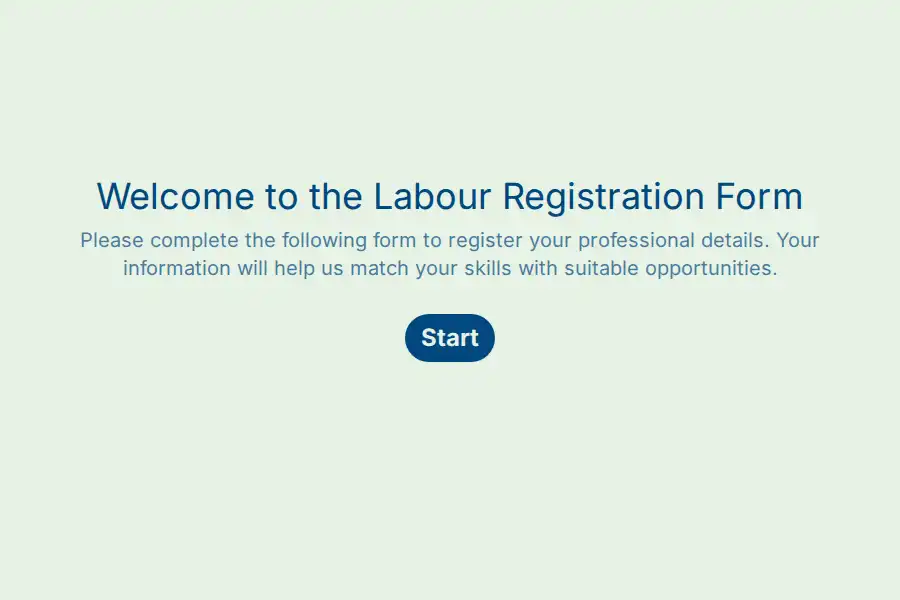
A pool earns its keep at the moment of the 6:40 a.m. call. This labour registration form template builds that asset properly: every worker registers once with skills, rates, availability, and documents — and every placement after that is a filter, not a phone marathon.
The Registration Profile That Matches on Demand
- Trade depth, not just a headline — a dropdown for the primary trade plus a multiple choice for everything else they’ll genuinely do: the laborer who also holds a dumper ticket is worth two registrations.
- Experience in years — a number field your coordinators can sort by when a client demands ‘someone senior.’
- Rate expectations, structured — the figure in a number field and its basis — hourly or daily — as a multiple choice. Rates captured as data mean quotes to clients happen in minutes, with no ‘what did we agree with him again?’ archaeology.
- Availability and reach — immediate or on notice, days per week, and a travel-radius dropdown covering the regions your jobs actually sit in. A worker who won’t cross the river is the wrong answer to a site across it.
The Document Wallet — Because Sites Check
Modern sites gate mobilization on paperwork. The registration collects a file upload wallet — identification, safety card, trade license cards — with each document’s expiry captured as a date field. Expiry-as-data changes everything: before every placement, filter for documents lapsing within sixty days, and chase renewals on your schedule instead of a site manager’s. A legal field captures the right-to-work declaration and consent to reference checks once, covering every future deployment.
From 6:40 a.m. Call to Confirmed Crew
When the request lands, the coordinator filters the response view — trade, availability, radius — and has a shortlist before the kettle boils. Confirmations go out where workers answer: straight into WhatsApp. Connect webhooks and every registration or update flows into your staffing system without re-keying, while role-based access keeps coordinator desks separate and worker records out of general view.
Keep the Pool Warm, Not Stale
Pools rot through silence, so refresh them deliberately: duplicate the form into a quarterly availability-and-documents check and send it to the whole register — a two-minute update that flags who’s still active, whose cards lapse next month, and whose number died. Tag each intake campaign with hidden fields and you’ll also learn which recruiting channel fills your pool with workers who actually get placed. Registry-style intake sits beside the signup templates and file upload collection, with broader operations forms in business forms.
Frequently Asked Questions
How is labor registration different from a job application?
An application answers one vacancy; a registration creates a standing profile for every future job. The worker is matched against demand as it arrives — which is what makes a labor-hire business fast instead of busy.
Which documents belong in the worker's file?
Identification, safety card, and any trade license cards, each with its expiry date captured as data. Sites increasingly verify before mobilization, and a pool with expired paperwork is a pool that can’t deploy.
How do we keep availability current?
Run a short re-registration wave every quarter using a duplicated form — two minutes per worker to confirm availability, rates, and documents. Stale profiles surface immediately and get cleaned before they cause a failed placement.
How fast can coordinators actually match a request?
With trade, availability, radius, and rate held as structured fields, a same-day request becomes a filtered shortlist in minutes — the difference between winning and losing the client’s next job.
Can several coordinators work the same pool?
Yes. Role-based access lets your coordination team share the register with appropriate permissions, so morning requests get covered by whoever’s on the desk — not by whoever holds the spreadsheet.