
Why Do You Want to Be Manager Form Template
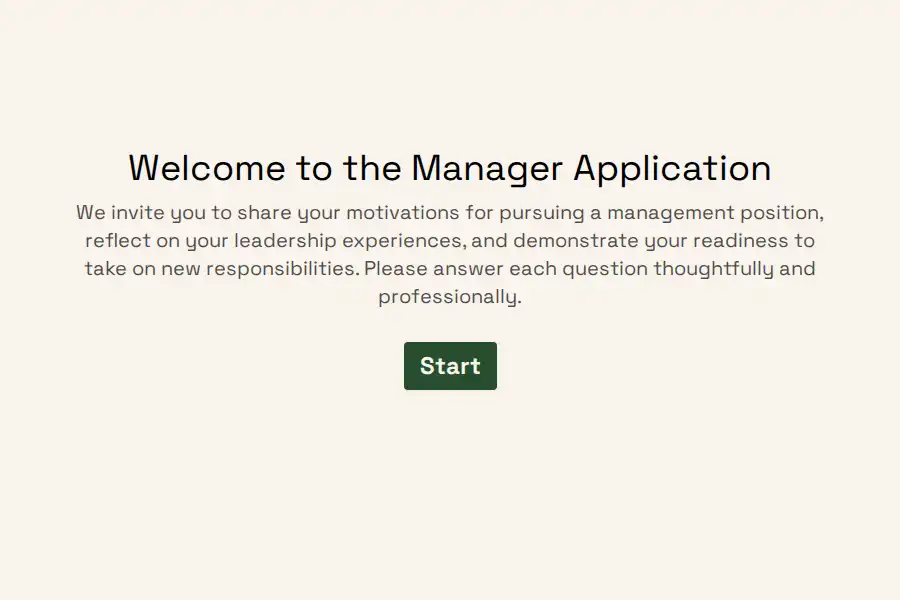
Managing internal promotion processes through informal conversations often favors the most visible employees rather than those with the strongest leadership potential. To build a fair, objective promotion path, decision-makers need a standardized method to assess candidates’ motivations, leadership philosophies, and plans for team development. This internal application form ensures that every candidate for a management role is evaluated on the same terms.
This template allows promotion committees and HR teams to gather structured narratives regarding leadership experience, conflict management, and 90-day priorities.
Elevating the Internal Promotion Process
Transitioning from an individual contributor to a management role requires a significant shift in skillset—from executing tasks to guiding and supporting people. Assessing this transition requires looking beyond an employee’s technical tenure to understand their readiness to lead.
Implementing a structured internal questionnaire gives every interested employee an equal opportunity to articulate their vision for the team, demonstrate their problem-solving capabilities, and detail their commitment to leadership, creating a transparent promotion process.
Leadership Competencies Collected
This form is structured to gather thoughtful, deep-dive responses regarding management readiness:
- Current Profile: Collects the employee’s name, current role or department, and tenure with the company.
- Motivation and Vision: Asks candidates to explain why they want to become a manager and what they believe makes an effective leader.
- Leadership Track Record: Invites applicants to describe their prior leadership experiences and share how they have supported colleagues or improved processes in the past.
- Conflict and Feedback: Gathers detailed insights into how the candidate handles difficult conversations and manages workplace conflicts.
- Strategic Planning: Asks candidates to outline their top priorities and transition goals for their first 90 days in the management position.
- Support and Development: Collects feedback on what training, resources, or support they would need to succeed in the role.
Utilizing Candidate Responses for Interviews
Once submitted, these forms provide a detailed dossier for the interview panel. Reviewing these written responses prior to the formal interview allows the promotion committee to identify areas they want to explore in more depth during the conversation.
Storing these applications within your internal HRIS or talent planning tools also helps identify employees with leadership aspirations, allowing you to recommend them for professional development or mentorship programs even if they are not selected for the immediate vacancy.
Frequently Asked Questions
What is a "why do you want to be manager" form?
This is a structured internal application used by HR and leadership teams to evaluate employees seeking promotion to management roles. It collects details on their leadership philosophy, experience, conflict resolution style, and initial priorities for the new team.
Why should companies use a standardized form for internal promotions?
Standardization ensures fairness and transparency, giving every candidate an equal platform to make their case. It moves the evaluation beyond tenure or visibility, helping promotion committees focus on leadership maturity and strategic vision.
What are the most important fields in this leadership application?
Key areas include the candidate’s explanation of their management philosophy, how they handle workplace conflict, and their proposed action plan for their first 90 days in the management role.
How can managers use this form for talent development?
Even if a candidate is not selected for a current opening, their responses can highlight areas where they desire growth, helping HR design targeted leadership training and prepare them for future promotion cycles.