
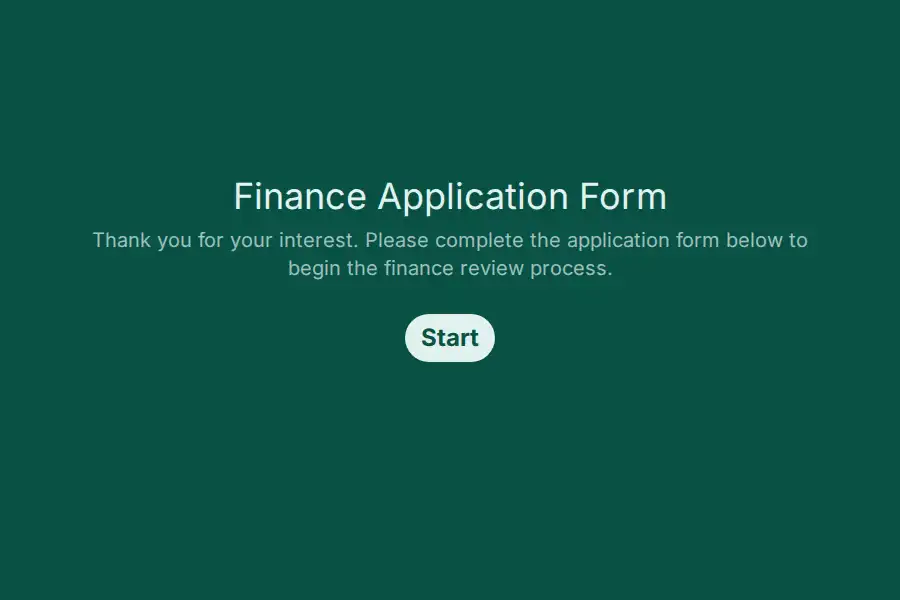




Finance Application Form Template
Financial institutions and alternative lenders face a persistent challenge during the onboarding phase. Clunky paper applications and unintuitive digital portals often cause high abandonment rates. Collecting sensitive applicant information requires a streamlined, highly structured format that guides the user through each field without creating unnecessary fatigue.
By replacing traditional paperwork with a structured digital intake form, lenders can improve completion rates while ensuring that every submission contains the complete set of data points required for underwriting. This template gathers personal, employment, and financial details in a logical sequence, preparing each file for efficient review.
Structuring the Financial Onboarding Workflow
A smooth onboarding workflow minimizes drop-offs by dividing the application process into logical thematic categories. Collecting contact details first allows lenders to follow up with applicants who might leave the form incomplete. The template then transitions into deeper financial questions, ensuring that applicants understand why each metric is being requested.
Using a clean, sequential structure reduces cognitive load, making sensitive questions about income and debt feel less intrusive. This structured approach helps ensure that applicants complete the form on their first attempt, reducing the administrative burden of chasing down missing files.
Key Eligibility Indicators Collected
To perform a preliminary assessment of creditworthiness and financial standing, this template gathers a comprehensive set of personal and professional data points:
- Contact & Personal Identification: Full name, email address, phone number, residential address, and date of birth to establish and verify applicant identity.
- Employment & Professional Standing: Current employment status, employer name, and job title to verify the stability of the applicant’s income.
- Income Details: Monthly income and an open-ended area to list other income sources, such as rental income, investments, or household contributions.
- Financing Parameters: Requested loan or financing amount, purpose of financing (such as debt consolidation, major purchases, or business development), and preferred repayment terms.
- Financial Health & Obligation: Existing monthly debt payments and self-reported credit score range to help calculate debt-to-income (DTI) ratios.
Verification and Supporting Documentation
Self-reported numbers only tell part of the story. To move from intake to active underwriting, lenders must verify the accuracy of the applicant’s claims. This template features a dedicated secure file upload question that allows applicants to attach supporting financial documents directly to their submission, such as recent pay stubs, tax returns, bank statements showing cash reserves, or government-issued identification.
Finally, the application concludes with a formal legal confirmation question. This field requires the applicant to acknowledge that all provided details are accurate and that they consent to having their information reviewed for underwriting purposes.
Compliance and Data Privacy Best Practices
Because finance applications collect highly sensitive personally identifiable information (PII) and financial records, maintaining strict security standards is non-negotiable:
- Secure File Transmission: Ensure all submitted data and uploaded files are encrypted during transit and at rest.
- Clear Disclosures: Provide a link to your institution’s privacy policy directly on the form so applicants know how their data will be processed and stored.
- Controlled Access: Limit access to completed submissions only to authorized underwriting and compliance team members.
Frequently Asked Questions
What is a digital finance application form?
A digital finance application form is a structured online questionnaire used by lenders and financial services to collect the personal, employment, and financial information needed to evaluate an applicant’s eligibility for credit, loans, or financing.
Why does the form ask for monthly debt payments?
Collecting existing monthly debt obligations alongside monthly income allows lenders to calculate the applicant’s debt-to-income (DTI) ratio. This metric is a key indicator of whether the applicant can comfortably afford the requested financing.
How can applicants upload supporting documents?
The template includes a secure file upload field that allows applicants to attach documents, such as tax returns or bank statements, directly from their computer or mobile device while completing the application.
What security measures should be applied to financial forms?
Because these forms collect sensitive financial details and personal identification, they should use encrypted data transmission, follow strict access controls, and comply with relevant financial data privacy regulations.