
Surveying Intern Template
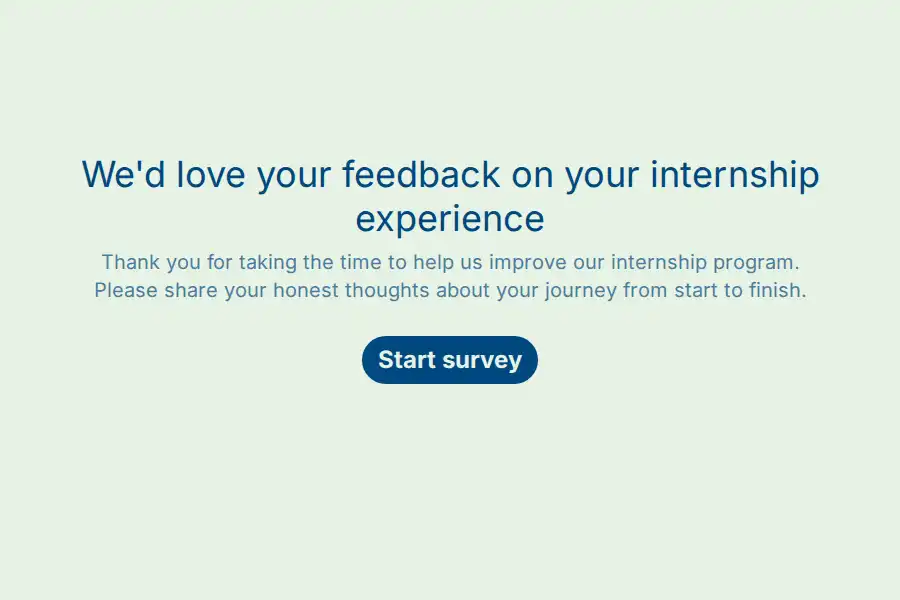
Internship programs are incredibly valuable for building a strong talent pipeline, but managing them effectively requires continuous improvement. Because interns see your onboarding, company culture, and daily workflows with fresh eyes, they are uniquely positioned to provide highly valuable feedback. This intern survey template gives program managers a clear, structured way to evaluate the intern experience before they head back to campus.
Collecting feedback on onboarding clarity, mentorship quality, and workload balance helps you address program gaps, refine your training, and increase the number of interns who convert into full-time hires.
Key Program Insights Captured by the Survey
This template collects feedback across every phase of the internship experience to help you evaluate program success:
- Onboarding Quality: Uses an opinion scale to measure how welcoming, structured, and clear the initial onboarding process felt.
- Mentorship Support: Evaluates the quality of day-to-day guidance, feedback, and support provided by the intern’s direct supervisor or mentor.
- Workload Balance: Collects feedback on whether the workload was manageable, light, or too demanding for their program duration.
- Skill Development: Features an open-ended field where interns can describe the specific professional skills and knowledge they gained.
- Expectation Alignment: Asks if the day-to-day work matched what was promised during the recruitment process.
- Program Improvement: Provides deep-dive fields for interns to highlight what worked particularly well and suggest areas for improvement.
- Peer Recommendation: Uses a quick yes-no question to measure if they would recommend the internship program to their classmates.
Ensuring Candid and Honest Intern Feedback
Because interns often hope to receive full-time job offers or letters of recommendation, they may hesitate to share honest feedback. To encourage candor, consider making name and email fields optional so submissions can remain anonymous. Explain that their honest insights are critical for improving the experience for future cohorts.
For the best results, send this survey during the final week of the internship, ahead of exit interviews. This gives interns plenty of time to reflect on their overall experience and ensures their feedback is fresh and top of mind.
Transforming Intern Insights into Program Upgrades
Compile and review the survey data at the end of each internship cycle. If multiple interns flag poor mentorship support, consider hosting training sessions for your mentors. If onboarding scores are low, focus on creating better training documents before the next cohort arrives. Using this feedback helps you build a highly competitive internship program that attracts top talent.
Frequently Asked Questions
What is an intern survey?
An intern survey is a feedback questionnaire completed by interns at the end of their placement. It gathers insights on onboarding, mentorship quality, workload balance, and suggestions for program improvements.
Why should we gather feedback from interns?
Interns provide fresh, unbiased perspectives on your onboarding and culture. Gathering their feedback helps you identify issues in your management and training, allowing you to improve the program and increase full-time conversion rates.
Should intern feedback surveys be kept anonymous?
Making the survey optional or anonymous is highly recommended. It allows interns to share honest, candid feedback about their workload or mentors without worrying about their job offers or references.
When is the best time to send out this survey?
Send the survey during the final week of the internship program. This ensures the feedback covers the entire placement while allowing you to review responses before final exit interviews.
What should we do if interns report feeling overwhelmed by their workload?
Review the feedback by department to see if certain teams are assigning too many tasks. Work with team leads to clarify project scopes and set realistic boundaries for future internship positions.