


Eight Weeks Raising a Litter. One Week to Get the Placements Right.
A responsible breeder’s real product isn’t the puppy — it’s the twelve years that follow. But placement week is where good outcomes are decided: which family receives which puppy, whether first-time owners understand the puppy blues heading their way, and whether the contract terms protecting the dog are understood before the deposit rather than after the regret.
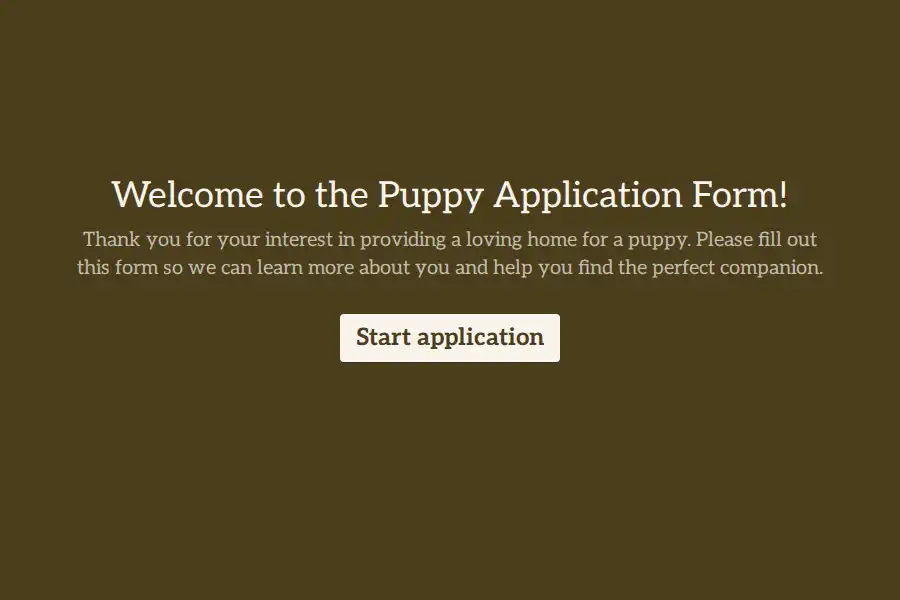
This puppy application form template runs placement like the serious process it is — from waitlist qualification through contract signature.
Qualify the Waitlist Before the Litter Is Even Born
Strong litters carry waitlists longer than the litter itself. The application does the qualifying so you aren’t doing it by phone at midnight: household experience with dogs, hours the puppy will be alone on a typical day, children’s ages, and the question that predicts returns — is everyone in the house actually agreed on this? An application submitted by one enthusiastic spouse over a hesitant partner is a rehoming request in four months.
Preferences come next, and picture choice does the work text can’t: applicants select the coat colors and sex they’re hoping for from images, so ‘a golden girl, ideally light’ arrives structured instead of ambiguous. Tag each litter’s application link with hidden fields and submissions file themselves by litter automatically.
Read the Household Like a Placement Professional
Alone-hours isn’t bureaucracy — it’s the difference between a puppy that settles and one that learns to scream for eight hours a day. The form captures the daily schedule honestly, prior dog experience, and the training plan: classes, socialization, crate training. Breeders working from this data match confident puppies to busy households and softer puppies to quieter homes — the placements that stick.
Commitments That Outlast the Handover
The section most applications skip is the one that protects the dog: a legal field capturing the spay/neuter agreement, the no-resale clause, and — the one that matters most — the return-to-breeder commitment, your safety net under every placement you make. Signed digitally with a timestamp, handshake promises become documented, referable records.
From Application to Choosing Day and Beyond
Long applications get interrupted — partial submissions save progress when a family finishes after the kids are in bed. At placement time, a custom redirect can send approved applicants straight to your choosing-day scheduler, and an automated confirmation email delivers your puppy-pack links. Keep the relationship running after pickup with a WhatsApp group for the litter’s families — breeders who stay reachable hear about problems while they’re still small. Companion screening workflows sit in the application templates sub-category.
Frequently Asked Questions
When should prospective owners apply?
Ideally before the breeding is even confirmed. A qualified waitlist lets you match puppies to homes as temperaments emerge at six or seven weeks, instead of screening in a panic at eight.
What contract terms should the application capture?
Spay/neuter requirements, the no-resale clause, health guarantee acknowledgement, and the return-to-breeder commitment. A timestamped digital signature makes every term documented and referable.
Can first-time owners apply?
Yes — the experience questions exist to guide placement, not to gatekeep. First-timers matched with a confident, forgiving puppy and genuine breeder support often become your best ambassadors.
How do we handle deposits?
The application covers qualification and commitment; deposits follow through your preferred payment process once you approve an applicant, with the post-submission redirect pointing approved families at that exact next step.
What happens if a placement doesn't work out?
The return-to-breeder clause you collected in writing is the answer: the puppy comes back to you without a shaming interrogation, and the household learns you meant what you said. Puppies you bred should never be rehomed by strangers.