
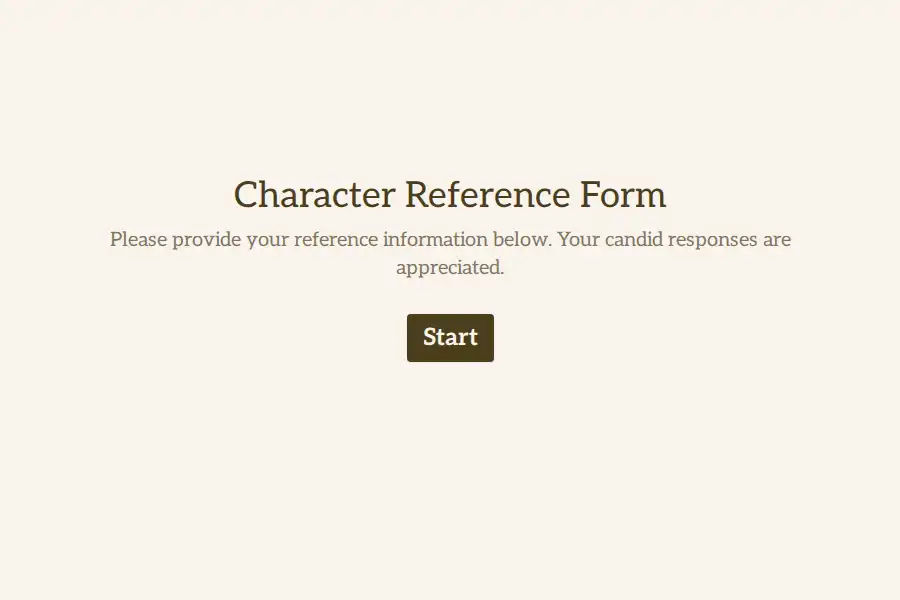

Character Reference Form Template
Unstructured reference letters are often too generic to assist in critical decision-making. When a referee simply writes a brief, polite statement about an applicant, it rarely provides the deep qualitative insight required to evaluate integrity, work ethic, or personal character. Utilizing a structured character reference form guides referees through targeted questions, generating more specific and useful responses.
This character reference form template is designed to help employers, academic institutions, housing managers, and volunteer coordinators collect consistent, high-quality feedback. By prompting referees to reflect on specific traits and share concrete examples, you receive actionable observations rather than vague pleasantries.
What to Cover in a Character Reference Form
A comprehensive personal recommendation should provide both context and specific evidence of an applicant’s qualities. The template structured questions capture:
- Referee Context and Relationship: Establishes the referee’s identity, contact information, how long they have known the applicant, and in what capacity.
- Qualitative Assessments: Prompts the referee to describe the applicant’s character, core strengths, and personal attributes in detail.
- Behavioral Examples: Requests specific real-world examples demonstrating the applicant’s integrity, reliability, or dedication.
- Overall Recommendation: Asks for a clear recommendation for the specific opportunity (e.g., employment, housing, volunteering) and verifies if the referee is open to brief follow-up contact.
Improving the Quality of Received References
To ensure you gather meaningful feedback, consider these operational strategies:
- Guide the Focus: Instead of leaving the entire form open-ended, use focused text areas that prompt the referee to address specific attributes like accountability, teamwork, or resilience.
- Keep it Accessible: Referees are often doing a favor for the applicant. Keep the form simple, accessible, and optimized for mobile devices so they can complete it quickly on their own schedule.
- Validate Intent: Including questions regarding willingness to be contacted for a follow-up call helps verify the referee’s commitment and adds credibility to the submission.
Implementing the Reference Workflow
When a candidate reaches the reference stage of your process, email the form link directly to their designated referees. This approach prevents the applicant from acting as an intermediary, maintaining the confidentiality and authenticity of the feedback. Submissions can be routed directly to the applicant’s file, keeping your recruitment or evaluation record organized and centralized.
Frequently Asked Questions
What is a character reference form?
A character reference form is a structured survey sent to an applicant’s personal or professional contacts. It is designed to evaluate the applicant’s personality traits, ethical standards, and suitability for a role, home, or academic program.
Who should be asked to provide a character reference?
Character references are typically provided by individuals who know the candidate well in a non-familial capacity. This can include mentors, community leaders, former supervisors, teachers, or long-standing professional colleagues who can speak to their personal attributes.
Why is a structured form better than a traditional reference letter?
A structured form ensures that every referee answers the same key questions, making it simpler to compare feedback across multiple candidates. It also prevents referees from skipping important details, such as the duration of their relationship with the applicant.
How long does it take a referee to complete this form?
The template is balanced to be thorough yet respectful of a referee’s time. It typically takes less than ten minutes to complete, which helps improve overall submission rates.
Can we follow up with referees who complete the form?
Yes. The template includes a clear yes/no question asking referees if they are comfortable with follow-up contact, along with their phone number and email fields to make coordination straightforward.