
Unconditional Waiver and Release on Progress Payment Form Template
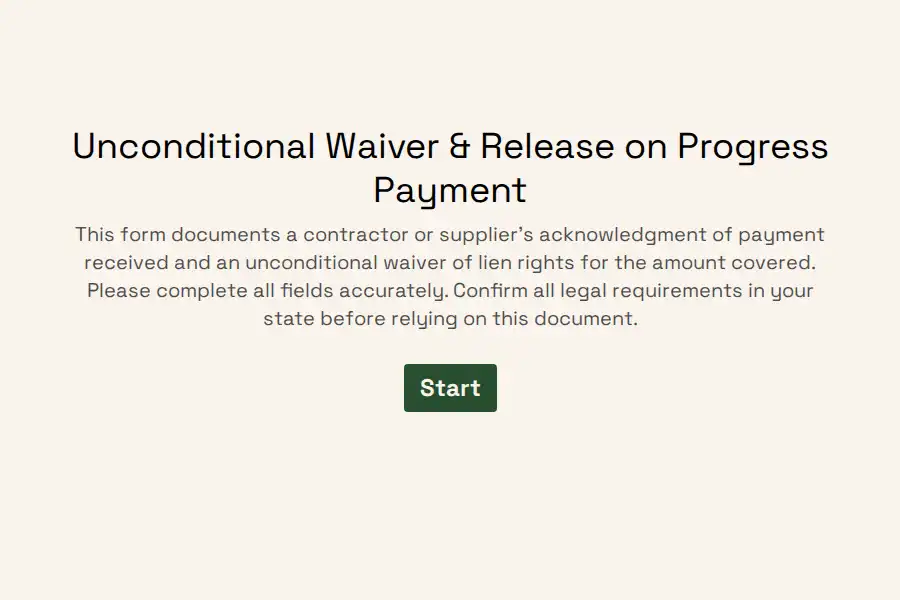
Managing progress billing on construction projects requires clear, organized lien documentation. Because an unconditional progress waiver takes effect as soon as it is signed—regardless of whether payment has fully cleared—both parties must understand and agree to the terms. This unconditional waiver and release form template provides contractors, subcontractors, and suppliers with a consistent way to document payment receipts and release associated lien rights through a specific date.
Why Structured Progress Waivers Are Vital
In the construction industry, property owners and general contractors use progress waivers to protect themselves from mechanics’ liens as partial payments are made. For releasing parties, providing a structured digital waiver ensures that the specific project addresses, “through dates,” and payment amounts are clearly documented, which helps avoid legal disputes and ensures billing records remain accurate.
Comprehensive Breakdown of the Waiver Form
This template captures all the essential legal and project details required to document a valid progress release:
- Claimant Identity: Gathers the full legal name, company name, and project role (such as subcontractor, supplier, or general contractor) of the releasing party.
- Hiring Party and Project: Identifies the customer or hiring party, project name, full physical project address, and county.
- Financial Details: Collects the exact payment amount received (in USD) and the specific date the payment was completed.
- Temporal Boundaries: Includes a structured date selector to establish the “through date” (the specific cutoff date through which lien rights are waived).
- Scope of Work: Features a long-text area to describe the labor, services, equipment, or materials provided during the billing period.
- Signer Verification: Captures the authorized signer’s name, professional title, and signing date.
- Communication and Files: Gathers a designated email address for sending a copy of the signed waiver, along with a file upload field for attaching receipt documents or bank confirmations.
Standardizing Your Lien Release Process
You can share this waiver form link directly with subcontractors, embed it in your contractor portal, or distribute it via email during progress billing cycles. Linking submissions to tools like Google Sheets or your project management database via Zapier allows your billing team to easily track active releases and keep your project records updated.
Frequently Asked Questions
What is an unconditional waiver on progress payment?
It is a legal document confirming that a claimant has received a partial progress payment and permanently waives their right to file a mechanic’s lien for work completed through the stated “through date.”
What is the significance of the 'through date' on this form?
The “through date” is the specific cutoff date for the release. The claimant waives their lien rights for all work completed on or before this date, regardless of when the payment was actually processed.
Who should sign this waiver form?
This form should be completed and signed by an authorized representative of the subcontractor, contractor, or material supplier who is releasing their lien rights in exchange for payment.
How does this differ from a conditional waiver?
A conditional waiver only takes effect once the payment has actually cleared the bank. An unconditional waiver takes effect immediately upon signing, which is why it is typically used after payment has been verified.
Can we customize this template for state-specific lien laws?
Yes. Many states have specific statutory language required for lien waivers to be enforceable. You can easily update the text fields in this template to match your state’s legal guidelines.