
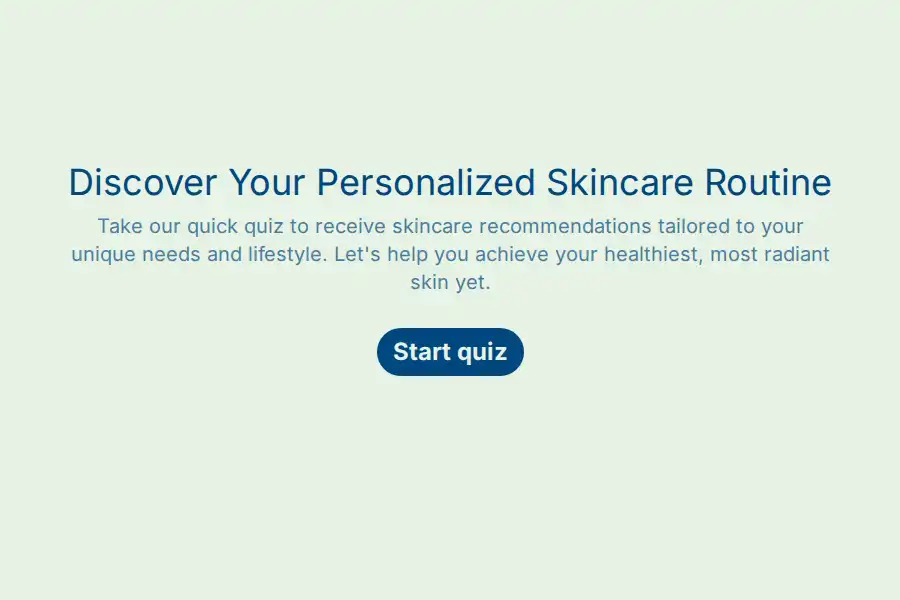

Skincare Quiz Template
Shoppers don’t abandon skincare stores because prices are wrong — they abandon because they’re lost. Forty cleansers, three acids they’ve heard scare stories about, and a checkout that demands commitment before understanding. A skincare quiz fixes the actual problem: it gives shoppers a personalized answer before asking for anything, and the brands that deploy them consistently watch conversion climb and returns fall.
Why Quizzes Outsell Product Pages
The mechanics are simple and proven:
- Personalization converts. A recommendation feels like service; a catalog feels like homework. Shoppers who answer six questions arrive at a product page already persuaded
- Confidence reduces returns. Products bought from a match are returned far less than products bought from a hunch
- Every answer is data. By question three you know the shopper’s skin type, concerns, and budget band — intelligence no product page collects
Designing Questions That Shoppers Enjoy
Quiz questions should feel like a friendly aesthetician, not an intake form:
- Start with the concern they feel — breakouts, dullness, redness, first lines — using picture choices so shoppers point rather than parse
- Ask about habits, not chemistry: how does your skin feel by 4 p.m.? beats asking about sebum production
- Keep it to six to eight questions with a progress bar — completion rates collapse past two minutes
- Capture the email at the results page with a simple email question, never at the start; asking before giving kills completion
The Results Page Is the Product
Where shoppers land after the last question decides everything:
- Lead with the named routine — cleanser, treatment, moisturizer — not a wall of options
- Explain the why per pick in one line each, echoing their own answers back
- Offer the bundle, and one honest alternative at a different price point
- Make the CTA unmistakable
Quizzes that end in a clear, personalized routine routinely become a store’s highest-converting page.
Segmentation From the First Question
The quiet revenue: every completed quiz segments your list for free:
- Tag subscribers by skin type, concern, and budget — captured through hidden fields passed into your email platform
- Trigger welcome flows by concern: the acne segment gets education and the acne bundle; the anti-aging segment gets routine-building content
- Watch which segments convert and re-quiz seasonally as skin changes
Brands often find their quiz list out-earns their general list several times over — because it’s a list of people who told you their problem.
Measuring What the Quiz Earns
Track completion rate, results-to-purchase conversion, and revenue per quiz-taker against store average. Connect submissions to your stack and the numbers report themselves. For brands running the quiz as an on-site experience, embedding it on your storefront keeps shoppers in your world start to finish.
Frequently Asked Questions
How long should a skincare quiz be?
Six to eight questions, under two minutes. Every question must either shape the recommendation or the segment — a question that does neither is abandoned revenue.
Do quizzes work for small brands or only big stores?
Small brands arguably benefit more — a quiz replaces the expertise a shopper can’t find on a young store’s pages, and becomes the consultative layer that justifies trust and price.
Should the quiz recommend one product or a routine?
Routines outperform single products for skincare, since results depend on layering — and routine buyers return for refills. Offer the full routine plus one single-product entry point for cautious shoppers.
Can I use the quiz results in my email marketing?
That’s half its value — pass answers into your email platform as tags, then trigger flows per concern and skin type. Shoppers who received a routine recommendation will open emails about exactly that routine.