
Secret Santa Likes and Dislikes Form
Secret Santa gets awkward when the person drawing a name has no idea what the recipient likes. A group chat can solve the problem, but it also makes private preferences visible and quickly becomes difficult to organize.
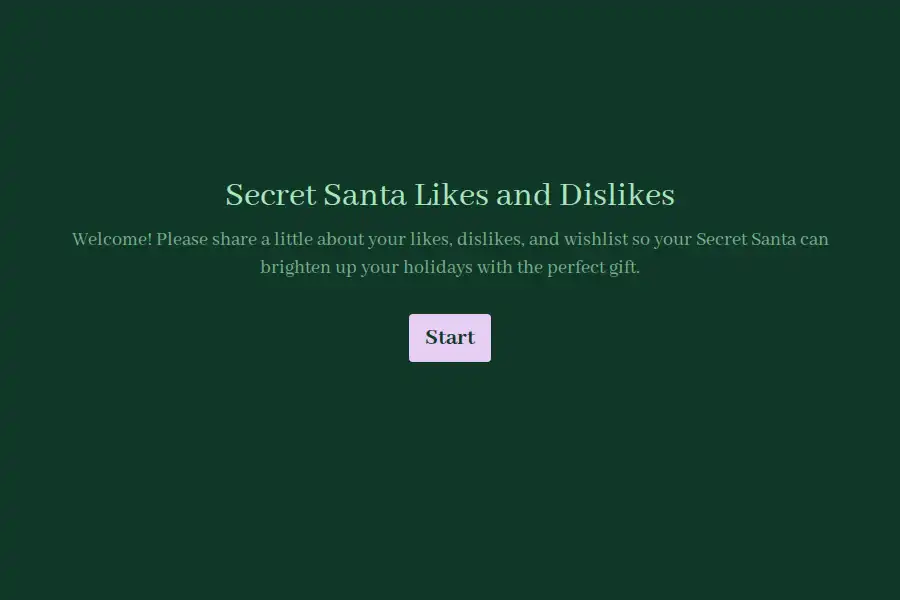
A dedicated likes and dislikes form gives every participant a private place to provide useful gift clues before shopping starts. The organizer can then share only the relevant information with each gift giver while keeping the exchange itself a surprise.
What participants should tell their Secret Santa
Ask for practical information rather than forcing people to create a perfect wish list. Useful questions include:
- A few gift ideas or items on their wish list
- Favorite hobbies and interests
- Things they definitely do not want
- Preferred colors, styles, or themes
- Clothing or shoe sizes, if relevant
- Dietary restrictions for edible gifts
- Favorite snacks, drinks, books, or activities
- Experiences they would enjoy
- Any strong dislikes or sensitivities
An open-ended “anything else your Secret Santa should know?” field can catch preferences that do not fit neatly into predefined choices.
Use conditional questions for better clues
Not everyone needs the same follow-up questions. If someone says they enjoy food-related gifts, ask about dietary restrictions. If they prefer clothing, ask for sizes or style preferences. Someone who prefers experiences may benefit from questions about hobbies and activities instead.
This keeps the form compact while still producing useful information. One-question-at-a-time presentation also works well for a casual holiday activity because participants can move through the prompts without confronting a large questionnaire.
Keep the budget clear
Agree on the spending range before participants complete the form. You can include a multiple-choice budget field so everyone acknowledges the same expectation, such as a defined range around the group’s agreed limit.
If someone has a genuine concern about the budget, provide a private text field rather than making them explain it in the group chat. The organizer can address exceptions without exposing personal circumstances to everyone else.
Share answers without spoiling the exchange
The organizer should keep the complete response set private. After participants are matched, share only the recipient’s relevant preferences with their assigned giver.
Responses can be exported to Google Sheets via Zapier, where the organizer can filter the information for each match. Email notifications can also be used to send a participant’s relevant answers to their assigned giver. Avoid giving every participant access to the full response list, since that can reveal matches and reduce the surprise.
Make the form useful, not exhaustive
The goal is to help someone choose a thoughtful gift, not to create a detailed personal profile. A handful of specific preferences is usually more useful than dozens of questions. Ask about what someone enjoys, what they avoid, and what practical constraints the giver needs to know before buying.
Frequently Asked Questions
What should I include in a Secret Santa likes and dislikes form?
Include wish-list ideas, hobbies, favorite things, dislikes, clothing or shoe sizes when relevant, dietary restrictions for edible gifts, and any gift categories the participant would prefer to avoid. A budget field can also help confirm that everyone understands the spending range.
How do I keep Secret Santa answers private?
Keep the full response sheet restricted to the organizer or designated coordinators. After matching participants, provide each giver only the information belonging to their assigned recipient. Sharing filtered results through a private message or email helps protect the surprise and prevents accidental exposure of other participants’ answers.
Can the form handle different gift preferences for different people?
Yes. Conditional logic can show relevant follow-up questions based on earlier answers. Someone interested in food gifts can be asked about dietary restrictions, while someone who prefers experiences can answer questions about hobbies or activities. This makes the questionnaire more useful without making every participant answer every question.
Should I ask about the Secret Santa budget?
Yes, if the group has a defined spending limit. A multiple-choice range can confirm that participants understand the expectation without requiring them to disclose an exact personal budget. Include a private comment field if participants need to flag a concern with the organizer.
Can this form work for family or friend gift exchanges?
Absolutely. The same approach works for office exchanges, family Secret Santas, friend groups, virtual holiday parties, and other gift swaps. Adjust the tone and questions to suit the group, and remove fields that do not make sense for the type of gifts being exchanged.
How should I use the responses after participants are matched?
Use each recipient’s answers as a shopping guide rather than a strict shopping list. Share the useful clues with the assigned giver, keeping sensitive or unnecessary information private. The best responses give the giver several directions to explore while still leaving room for a thoughtful surprise.