
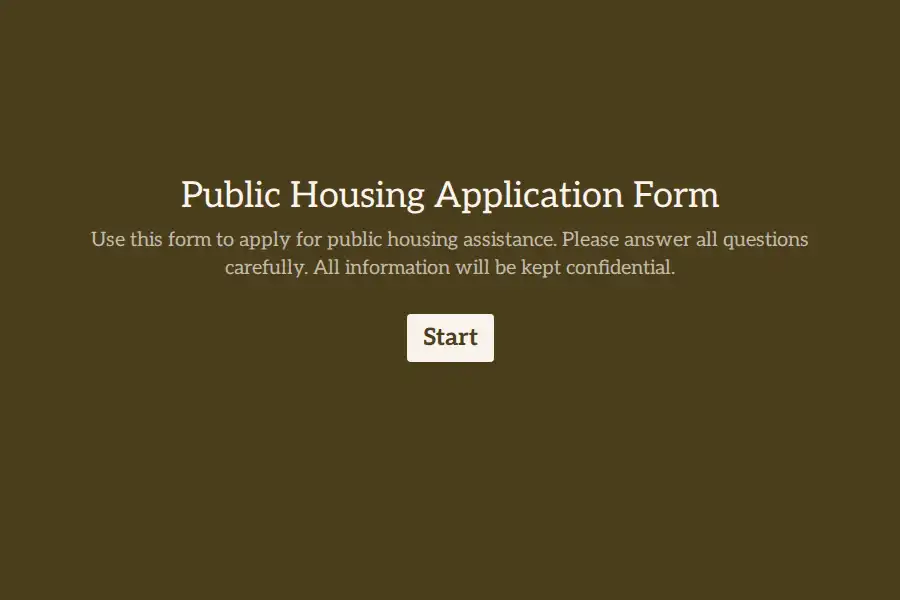


Public Housing Application Form
A housing authority’s waitlist is only as fair as its intake. When applications arrive on paper — or worse, as incomplete packets missing an income figure or an accessibility note — review slows to a crawl, and the families who can least afford the delay wait longest. Every incomplete file is somebody’s placement pushed back a month. This application form makes completeness the default: nothing reaches your waitlist queue until every required answer is in.
The Intake, in Order
The form walks applicants through the phases your reviewers work in:
- Who is applying. Legal name, date of birth, and contact details, collected with a structured contact field.
- Who is coming with them. Total household size as a numeric entry, plus names and ages of every prospective occupant — the numbers bedroom count and subsidy calculations hang on.
- What they earn. Employment status and total monthly household income, the two figures most eligibility rules are written around.
- What they need. Current housing situation, reason for applying, and preferred areas or developments — presented as a multiple-choice list you edit to match the properties you actually manage.
- Accessibility and accommodation. A direct yes/no question on mobility or accommodation requirements, with room to describe specifics so applicants land in units that work for them the first time.
- The evidence. A document upload for income proof and identification.
- The declaration. An accuracy confirmation that closes the file.
Completeness Is Fairness
Regulated programs live and die by consistent records. Required fields guarantee that income, household size, and accommodation needs are present before submission — no reviewer ever opens a file missing the numbers that decide placement. After submitting, each applicant can receive an automatic confirmation email with a copy of their answers, which cuts did you get my application? calls dramatically. The progress bar keeps applicants moving through a long form instead of abandoning at question four.
Behind the Desk
Housing applications carry some of the most sensitive data your authority holds. Restrict who can browse submissions using workspace roles and permissions so intake staff see what they need and nobody else does. When your case management system should own the record, a webhook delivers each application the moment it lands.
This template belongs to the rental application collection; housing charities and assistance nonprofits will also find related intake forms in the nonprofit templates.
Frequently Asked Questions
How is waitlist position actually determined?
By your local rules, not by this form — but the form decides whether those rules can be applied. Most authorities rank by a mix of income eligibility, household size, local preference categories, and application date. Complete, structured intake means every one of those factors is captured for every applicant, so ranking is a filter, not an investigation.
What happens when an applicant's income changes after they apply?
Treat it as an update, not a new application. Note the change against the existing record and re-run eligibility at the time of review — which is precisely why structured records matter: the original figures, the change, and the date are all on file when the unit comes available.
What should applicants prepare before starting?
Income documentation (recent pay stubs or benefit letters), identification for adult household members, and children’s ages. Saying so in the invitation email — and allowing document uploads from a phone — prevents the most common cause of stalled applications: hunting for paperwork mid-form.
Can this form support housing voucher programs too?
Yes. Voucher intakes collect the same core data — household, income, preferences — with program-specific additions. Duplicate the form per program so each keeps its own review queue and wording, and edit the preference lists to match what each program’s rules actually prioritize.