
The Wedding Ends. The Record Begins.
The confetti settles, the license comes out of the officiant’s folder, and the marriage legally exists only once the completed certificate reaches the registry. In practice, this is where weddings generate their most tedious problems: a bride’s legal name spelled the way everyone says it rather than the way her passport does, a witness who signed ‘Bob’ where ‘Robert Andrew’ was needed, a filing that sat in a glovebox past its deadline. Each of these converts a beautiful Saturday into a months-long correction process that neither the couple nor the registry enjoys.
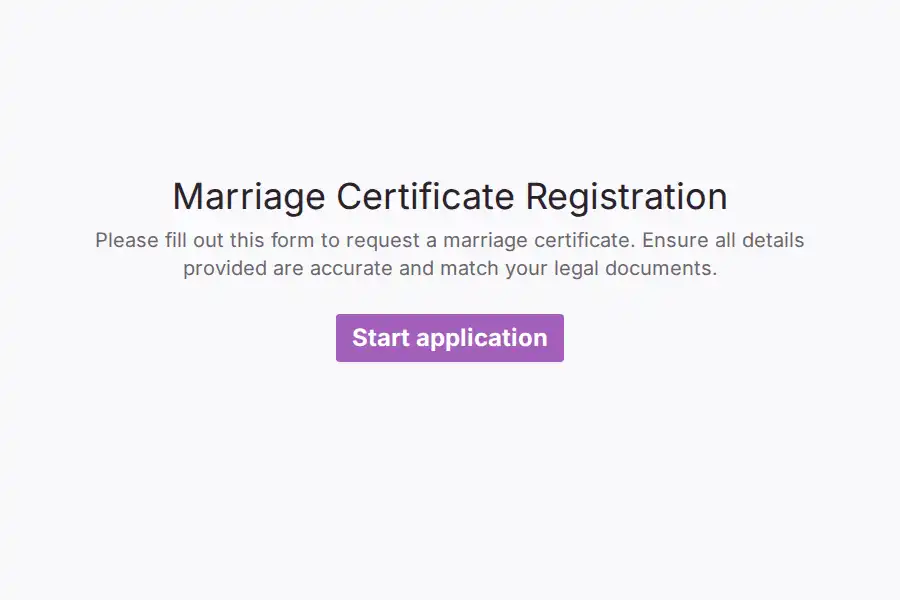
This marriage certificate registration form template is the officiant’s instrument for closing the loop — completed at the venue, in minutes, with every name verified against a document rather than against memory.
The Facts That Become the Record
The certificate’s core entries are few and unforgiving. The ceremony date via a date field, the venue and its locality, and the officiant’s own particulars: full legal name, title, and credential or registration number — the details that establish their authority to solemnize in the jurisdiction. None of this is optional on the record, and all of it is typo-prone when handwritten at a reception, which is precisely why it belongs in a structured form.
The Couple, Spelled Like Their Documents
Here is the rule that prevents almost every correction request downstream: names are entered exactly as they appear on government ID — middle names, accents, hyphenations, all of it. The form states this plainly at the entry step, and couples double-check their own spelling on screen far more carefully than anyone proofreads ink. Where the couple has documents to attach — the license itself, passports for reference — a file upload field keeps them alongside the entry they support.
Witnesses, Signed While Present
Most jurisdictions require one or two witnesses, and the record needs their legal names and signatures — not the diminutives they go by at dinner. The form collects each witness’s full name in a short text field with the same ‘as on your ID’ instruction, and their attestation through a legal field completed on the spot. The reason for the urgency is simple: a witness who has flown home Sunday morning cannot re-sign Tuesday’s correction, and registries do re-speak to witnesses when certificates are later challenged.
The Officiant’s Certification and the Clock
The filing closes with the officiant’s own legal certification that the ceremony was performed as recorded. Then the deadline most officiants know and some forget: registries commonly expect the completed record within days or weeks of the ceremony — the exact window varies by jurisdiction, and a missed one turns a routine filing into a late-registration procedure with extra paperwork attached. An instant notification each time a registration is completed keeps the office’s filing queue honest.
A Register That Builds Itself
Every completed registration accumulates in the response view — the ceremony register, searchable by date, venue, or officiant, exportable whenever the registry’s reporting cycle asks. Webhooks can pass each record into your vital-records system the moment it’s signed, closing the gap between ceremony and database to minutes.
For the step that follows — couples and family members requesting certified copies for passports, banks, and insurers — a dedicated certificate copy request form handles retrieval, keeping this one focused on filing the record itself. Ceremony and celebrant administration sits beside the registration templates collection and the event planning library.
Frequently Asked Questions
Who files the marriage record after the ceremony?
Typically the officiant — celebrant, clergy member, or civil registrar — whose certification completes the document. The form can be completed jointly at the venue: couple, witnesses, and officiant each adding their part before it’s submitted.
How soon after the ceremony must registration happen?
It varies by jurisdiction — commonly days to a few weeks. Treat the deadline as immediate: complete the record at the venue, and the question never arises.
What happens if a name is misspelled on the certificate?
A correction process — forms, evidence, fees, and waiting, often months. Because certificates unlock passports, bank accounts, and immigration files, prevention is dramatically cheaper: verify every name against ID during the filing itself, which is what the form instructs.
Can the registration be completed at the reception?
That’s the ideal moment — everyone required is present, documents are at hand, and the whole record takes minutes on a phone. A progress bar keeps the flow quick enough that nobody abandons the dance floor for long.
How do we handle a witness who couldn't sign on the day?
Some jurisdictions permit attestation after the fact; arrange it before the filing deadline and note the timing on the record. The cleaner path is prevention: the form’s witness steps are short and mobile-friendly precisely so nobody leaves without signing.
How do couples get their certified copies afterward?
Through the registry that holds the completed record — most offices handle copy requests directly or by post. Point newlyweds to your copy request form so retrieval is self-service rather than a counter visit.