

Streamline Non-Monetary Gifts and In-Kind Contributions
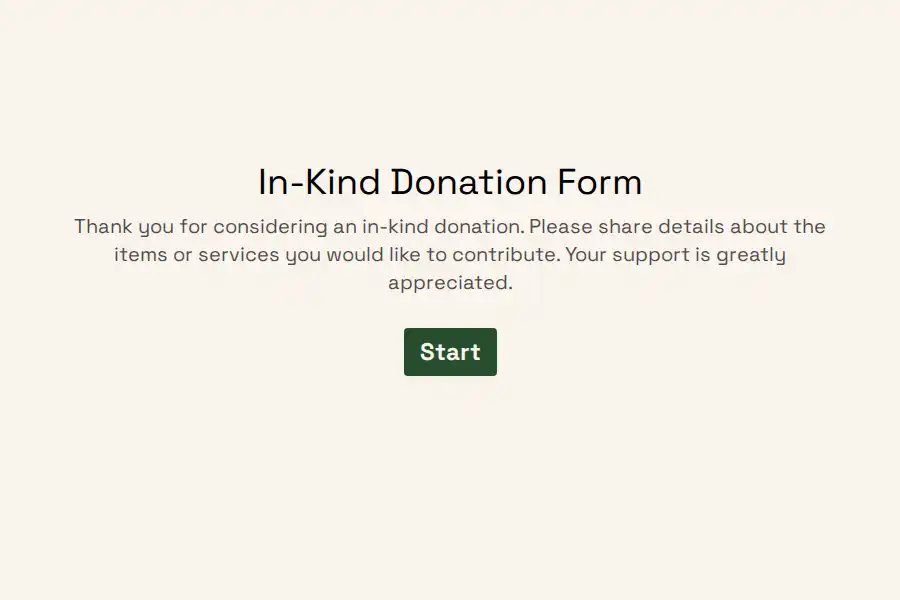
Accepting physical goods, vehicles, medical supplies, or pro-bono services can significantly bolster a non-profit’s capacity. However, managing these items requires careful logistics, storage coordination, and valuation for reporting. An in-kind donation form automates this process, gathering donor descriptions, estimated market values, delivery logistics, and photos before any items arrive at your warehouse or facility.
Preventing Logistics Bottlenecks Through Pre-Screening
Accepting every physical item offered can quickly overwhelm a charity’s storage space with unusable goods. Pre-screening donations through an intake form allows your program coordinators to evaluate the utility, condition, and compatibility of goods before accepting them. This process ensures that accepted items align with active programs, saving staff time and preventing disposal costs.
Vital Parameters Captured on the In-Kind Form
This template collects specific details to ensure safe, legally compliant, and organized transfers of goods:
- Donor Information: Collects structured contact details to ensure donor records remain clean and complete.
- Contribution Type: A multiple-choice field organizes the offering into standard categories such as equipment, professional services, inventory, or food.
- Detailed Description: A deep-dive text field prompts the donor to specify the exact quantity, brand, condition, and technical specs of their offering.
- Fair Market Value: Captures the donor’s self-estimated financial value of the item, which is necessary for tax receipts and financial audits.
- Logistics & Pickups: Multiple-choice parameters clarify if the donor will deliver the items or if the nonprofit needs to coordinate transport.
- Location Tracking: An address field provides geographic context for any requested pickups.
- Visual Verification: A file upload field encourages the donor to supply photos, helping staff assess condition instantly.
- Program Focus: A dropdown menu allows donors to choose which local program or initiative their physical gift should support.
- Legal Agreement: A confirmation checkbox ensures both parties understand the legal terms, ownership transfer, and validation of the submission.
Handling Fair Market Value and Tax Records
For non-monetary giving, the responsibility for determining the fair market value of the items rests with the donor, not the receiving charity. Collecting this self-reported value directly within the intake form allows administrators to generate accurate written acknowledgments. These automated workflows ensure that both the donor and the organization retain clean audit trails for annual tax filing.
Frequently Asked Questions
What is an in-kind donation?
An in-kind donation is a non-monetary contribution made to a charitable organization. This includes physical goods (such as food, computers, clothing, or building materials), professional services (like legal counseling, accounting, or design work), or the rent-free use of physical facilities.
How does our nonprofit determine the value of in-kind gifts?
According to IRS regulations, the donor is responsible for determining the fair market value of their non-monetary contribution. The intake form collects the donor’s estimated value, which is then recorded in the donor database and referenced in their tax receipt.
Why does the template ask for photo uploads?
Photo uploads allow your warehouse and logistics teams to inspect the condition of physical items before accepting them. This ensures you do not schedule pickups for damaged, obsolete, or non-functional equipment.
Can we use this form to coordinate pickups for heavy items?
Yes. The template contains a dedicated address question and a pickup requirement selector. If a donor indicates that they need assistance transporting their items, your logistics team will have the coordinates required to schedule a pickup.