


Your Rescue Can Only Save as Many Animals as It Has Foster Homes
Kennel space is fixed. Foster capacity is not — it grows with every household you onboard, and it collapses every time a burned-out caregiver quietly stops replying to messages. The rescues that save the most animals treat foster recruitment as the operational pipeline it is: clear specialties, honest commitments, and support that starts before the first animal walks through the door.
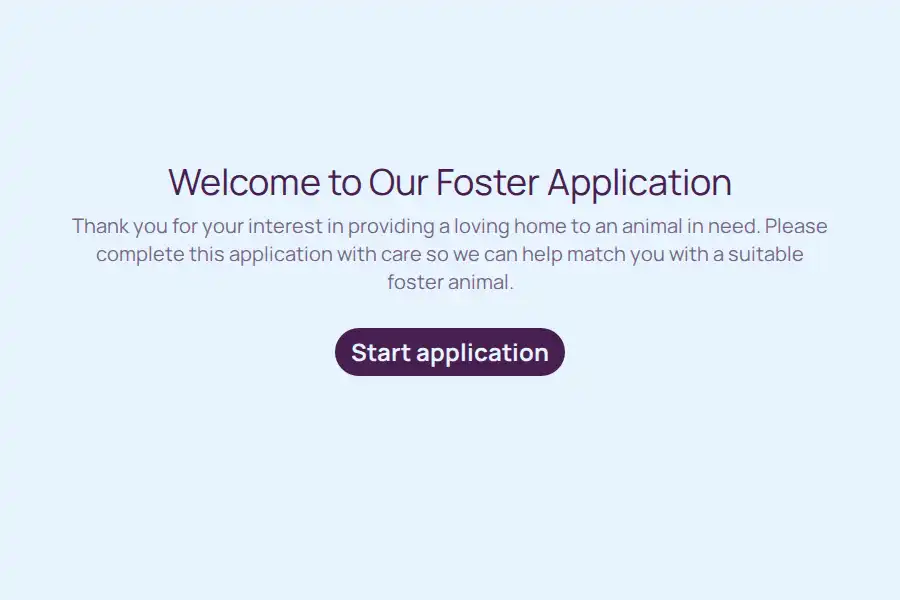
This foster application form template screens and onboards caregivers in the way that protects both them and you: by matching what a home can genuinely offer to the placements that actually fit.
Match Fosters to the Work, Not Just the Animal
‘Foster’ covers wildly different jobs. Bottle-feeding kittens every three hours. Nursing a heartworm-treatment dog through weeks of cage rest. Rehabilitating a shut-down shelter dog. Hospice care for a senior. A multiple choice question maps each applicant to the specialties they’re equipped for, and a rating question separates veterans from hopeful first-timers — both are welcome, but they need very different first placements.
Household Answers, Collected Before the Home Check
The home visit verifies what the application pre-collects: housing type and landlord permission for renters, yard and fencing for dogs, household members and their ages, and the animals already in residence. A yes or no question on landlord approval catches the renter-pet-policy problem before it becomes an eviction risk for your caregiver — the single most preventable failed placement in fostering.
Availability Is the Field Nobody Asks About — Until the Placement Fails
When can you start? A date field anchors the first possible day. How long can you commit — two weeks, a month, three months? Weekends only, or full weeks? A foster who travels every second Tuesday cannot take the neonatal litter, no matter how willing. Capturing the household’s real rhythm means your placement coordinator matches animals to actual calendars instead of good intentions.
Build the Support Loop Into the Onboarding
Foster attrition is usually support failure, not compassion failure. Close the application by setting expectations — supply kits collected from the shelter, vet visits scheduled by your team, a group chat for the 3 a.m. questions — and let new fosters choose how coordinating messages reach them, including shared directly over WhatsApp for volunteers who live on their phones. An automated welcome email confirming what happens next turns a completed application into a relationship.
Track your roster in the response view, filterable by specialty and availability, and re-run the application as an annual re-commitment form to see who’s still in. Volunteer-driven programs will also find companion intake in the nonprofit templates collection.
Frequently Asked Questions
Do foster applicants need prior experience?
No — but they need the right first placement. The experience rating lets coordinators start newcomers with straightforward animals while veterans take the medical and behavioral cases.
What does the form ask renters?
Whether their landlord permits fostering, alongside housing type. Verifying pet permission before placement prevents the lease violations that end fostering arrangements abruptly.
How long are typical foster commitments?
Anywhere from two weeks of holiday cover to months of medical recovery. The availability window captures each caregiver’s real capacity so placements fit the household.
Who covers supplies and vet care?
That’s your program’s design choice — most rescues provide food, equipment, and vet scheduling. Use the application’s closing section to state the support package so applicants know exactly what they’re signing up for.
Can one foster home take multiple animals?
Ask directly. Household capacity, existing pets, and the caregiver’s own limits determine whether a home takes one animal or a litter — and honest answers here prevent the overwhelmed-foster spiral.