
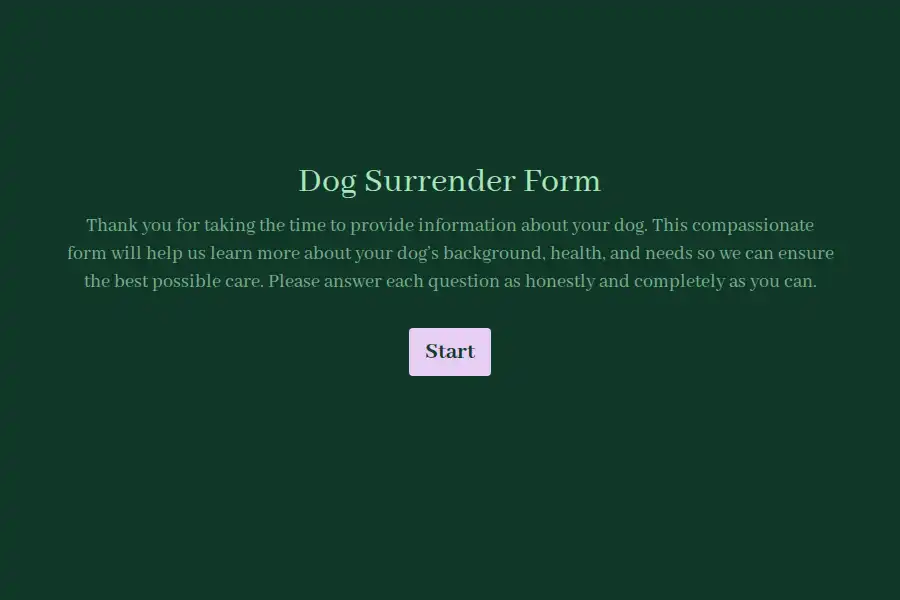


The Hardest Form Your Shelter Asks For — Design It Gently
The person completing this form is having one of the worst weeks of their life. Housing fell through, health collapsed, a behavior problem outgrew them. They’ve decided the best thing they can do for their dog is let them go — and now the paperwork asks them to explain themselves to a stranger.
Handled well, this moment starts a good outcome for the dog and a lasting relationship with the person. Handled badly — vague questions, repeated phone calls, visible judgment — it becomes a rushed handover with missing history and a dog nobody knows how to handle. This dog surrender form template collects the complete picture in one sitting, in language that doesn’t shame the person providing it.
Start With the Clock, Not the Paperwork
The first question is urgency: is the dog with you now, or days from needing a place? A plain choice or opinion scale tells your intake coordinator whether this file needs a callback within the hour or a scheduled appointment — and the phone number field ensures urgent surrenders reach a human, not an inbox. Teams running an emergency intake line can have flagged submissions forwarded straight to WhatsApp so the on-call volunteer sees them immediately.
The Behavioral Truths That Keep Everyone Safe
Staff and foster volunteers will handle this dog within hours of arrival. The form asks directly, using yes or no questions: comfortable with children, with other dogs, with cats — and whether a bite incident has ever occurred. A yes opens a follow-up for context: what happened, what triggered it, how the dog recovered. These aren’t accusations; they’re the details that determine kennel placement, foster matching, and whether an applicant with toddlers is a fit.
Medical Continuity From Day One
Medications, special diets, vaccination status, and the family vet’s details arrive as structured fields, with a file upload for veterinary records and rabies certificates. A shelter holding this file at intake can schedule care immediately instead of reconstructing a medical history by phone, from a clinic that has already closed.
Why We Ask About the Reason — and What We Do With It
The surrender reason does double duty. For this dog, context shapes rehabilitation and rehoming. Across a year of submissions, the pattern of reasons — evictions, vet costs, behavioral struggles — tells your organization which intervention programs would actually prevent surrenders: a pet food bank, training subsidies, a deposit-assistance fund. Shelters that track this build the programs their community needs.
A Private File for a Difficult Day
Surrender records hold personal circumstances alongside animal data. Role-based permissions keep them with intake staff only, and the thank-you page can state plainly what happens next — when they’ll hear back, what visitation looks like, and that their dog’s story travels with them. Care shown here is remembered for years. Adjacent shelter intake formats live in the nonprofit templates collection.
Frequently Asked Questions
What information should a dog surrender form collect?
Owner contact and urgency, the dog’s age and health status, compatibility with children and other animals, any bite history with context, current medications, vaccination records, and the reason for surrender.
Is it appropriate to ask about bite history?
It’s essential. Intake staff and volunteers are this dog’s first new handlers — knowing a bite history before arrival is what prevents the next bite. Ask for context, not blame.
What if someone needs to surrender immediately?
The urgency field routes time-critical cases to instant alerts so a coordinator calls within minutes, and WhatsApp forwarding can carry flagged submissions straight to the on-call phone.
Can owners upload veterinary records themselves?
Yes — vaccinations, medical history, and rabies certificates attach directly to the intake file, so care decisions never wait on records chasing.
Does the same form work for cats and other animals?
The structure transfers completely. Duplicate it with species-specific fields — indoor status for cats, fencing for dogs — and run one intake desk across every animal you take in.