
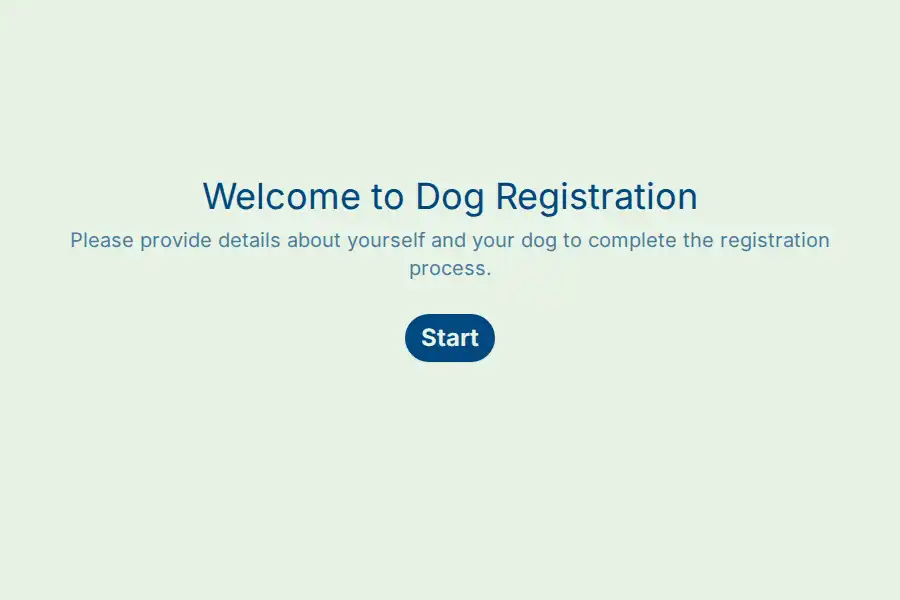
Protect Your Pet Facility with a Standardized Dog Registration Form
Operating a dog daycare, boarding facility, or private dog park requires precise record-keeping to keep all pets and staff safe. Without a formal intake process, important details like vaccination records, allergen alerts, and behavioral triggers can easily get overlooked.
Our dog registration form template simplifies this process, providing your business with a central record for every dog before they step inside. Gathering this structured information allows your team to prepare for each pet’s unique needs, manage playgroups safely, and act quickly if an emergency arises.
Key Areas Covered by the Template
A comprehensive pet registration needs to capture details about the pet, the owner, and the dog’s healthcare history. This registration form organizes these essential data points clearly:
- Owner Contact details: Captures full name, email, phone number, and preferred contact methods.
- Dog Profile: Records the dog’s name, breed, age, sex, size, and specific markings.
- Health and Medical History: Tracks spayed/neutered status, vaccination currency, known allergies, medical conditions, and veterinarian contact details.
- Emergency Protocols: Secures an alternative emergency contact name and phone number.
- Behavior Notes: Provides an open text field for owners to outline triggers, sociability issues, or general behavioral quirks.
Managing Safety and Vaccination Records
Confirming health details is the most critical step in pet intake. The registration form prompts owners to confirm whether vaccinations are up to date and includes a dedicated file upload field. This allows owners to attach veterinary certificates directly to the form, giving your team proof of immunization against critical communicable diseases before booking their first stay.
Knowing spay or neuter status and specific physical size metrics also assists your staff in organizing safe playgroups. Large, high-energy breeds can be grouped separately from smaller or senior dogs, reducing the likelihood of accidental injury or territorial stress.
Handling Behavioral Information
Every pet behaves differently in social environments. Capturing detailed behavioral notes and medical history in a structured format allows your staff to review special handling requirements. If a dog has food allergies or struggles with resource guarding, staff can adjust feeding and treat distribution accordingly. This proactive approach prevents avoidable emergencies, protecting your staff, your business, and the animals in your care.
Frequently Asked Questions
What are the core sections of a dog registration form?
A standard form should cover owner and emergency contact details, the dog’s physical characteristics, health and vaccination records, veterinarian contact information, and behavioral notes or handling instructions.
How does the form handle proof of vaccination?
The template includes a dedicated file upload field where owners can attach PDF copies or photos of current vaccination certificates, allowing staff to verify immunizations before the dog arrives at the facility.
Why should behavioral notes be included in pet registration?
Collecting behavioral details helps staff identify potential socialization issues, reactivity triggers, or anxiety patterns. This ensures your handlers can manage play groups safely and use appropriate techniques for each dog.
How does this form help in an emergency?
By collecting secondary emergency contacts, vet phone numbers, and known medical conditions upfront, your staff has immediate access to the necessary contact details and medical histories should a dog require urgent veterinary attention.