
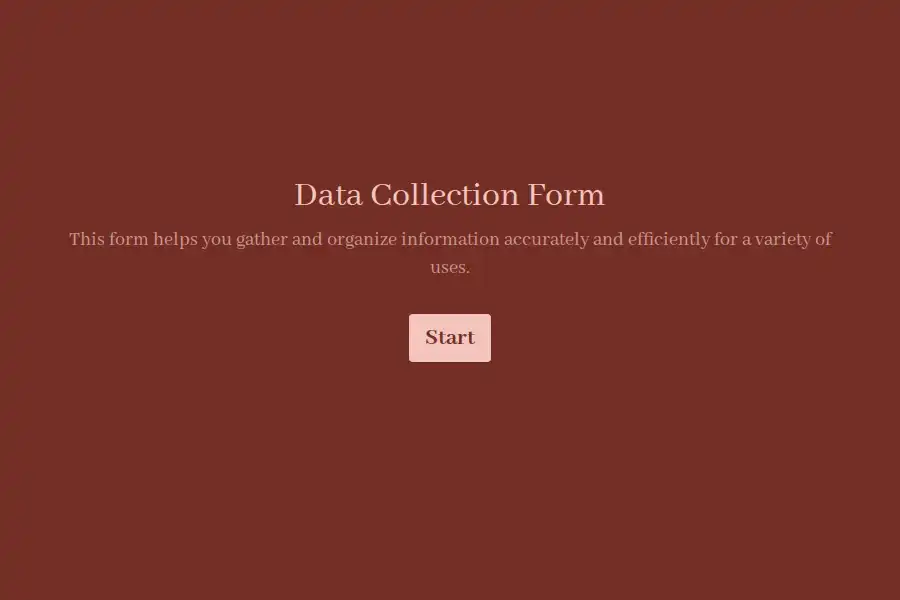
Data Collection Form Template
Inconsistent data structures make analysis difficult and waste administrative hours on manual cleanup. Whether you are running research, auditing operations, or collecting internal records, standardizing the intake process is the most effective way to maintain high data integrity.
Essential Components of a Data Collection Form
This template establishes a clear hierarchy to ensure submissions conform to your data requirements:
- Context and Purpose: Captures the type of information, its primary purpose, and the responsible department to ensure accurate classification.
- Structured Field Planning: Prompts respondents to specify required data fields and specify their update frequency.
- File Uploads and Access Control: Includes conditional fields for uploading supporting files and identifying who should have access to the dataset.
- Privacy and Compliance: Prompts the user to address privacy, consent, or compliance requirements, helping your organization protect sensitive data.
Preventing Errors at the Point of Entry
Rather than correcting formatting errors after submission, this form uses validation-friendly field types:
- Multiple Choice & Dropdowns: Restricts options for variables like department or information type to prevent duplicate variations (such as “US”, “USA”, and “United States”).
- Yes/No Conditionals: Shows or hides the file upload field based on whether supporting documentation is actually required, keeping the interface clean.
- Specific Output Goals: Keeps respondents aligned on the exact outcome the data must support, improving response accuracy.
Frequently Asked Questions
How can I ensure high data quality from external respondents?
Use structured fields like dropdowns, rating scales, and multiple-choice questions instead of open-ended text. This limits inputs to pre-approved options and makes analysis immediate.
When should I use conditional logic in data collection?
Use conditional logic to hide fields that do not apply to the respondent’s situation. For example, if they select “No” to uploading files, they should not see the file upload input field.
How do I handle privacy and compliance on data collection forms?
Always clearly outline your privacy policy and include a required consent checkbox if you are collecting personal, sensitive, or regulatory-controlled information.
Can this template be used for recurring weekly or monthly audits?
Yes. The structured dropdowns and fixed questions make it easy to compare submissions over time, ensuring consistency across different reporting periods.