
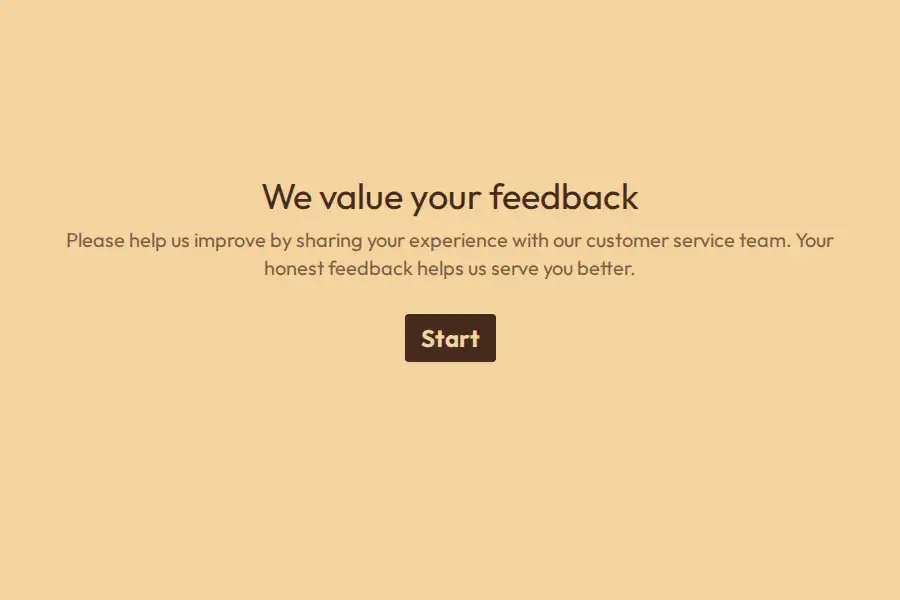
Customer Service Feedback Form Template
The moment a support ticket closes is the most valuable instant in the service-measurement calendar. The customer knows exactly what happened, the agent remembers exactly what they did, and the gap between the two is your training material. But the window is short: ask a week later and you’re surveying a memory that has already blended the wait time, the solution, and the person into a single vague feeling. This form fires at the closing moment and freezes the interaction into data.
The Interaction, Frozen at Close
The form captures the ticket as the customer experienced it:
- The ticket context — which channel (chat, email, phone), and roughly what the ticket concerned. Routing context that makes every rating comparable per channel and per issue type
- The verdict — CSAT on this interaction, one rating question
- The effort read — how easy was it to get help? Effort is the hidden tax of support — the transfers, the repeats, the explanations given twice — and it predicts loyalty after problems better than satisfaction does
- The resolution check — a yes/no: fully resolved, or still open? A friendly agent who doesn’t fix the problem scores well and still loses the customer
- The agent read — professionalism and clarity, rated for the humans who served. Recognition where earned; coaching signal where not
- The open line — what could we have done better? Optional, and disproportionately valuable
Timing: Wire It to the Close
The trigger is everything:
- On ticket closure — link in the resolution email or the chat-close message. The interaction ends; the form arrives; the rating lands within minutes
- Every ticket, or a sample — high-volume desks sample a slice; the trend needs consistency, not totality
- Under sixty seconds to complete — four ratings and an optional comment. Support customers just spent their patience on the ticket itself; the survey must not spend more
What the Stream Feeds
Three consumers, one data stream:
- Coaching — agent-level ratings and comments give team leads a fair, dated record for one-to-ones: patterns praised, patterns corrected, specifics in the customer’s words
- Alerts — a low score or an unresolved answer pages a supervisor for same-day recovery. Support problems compound through silence
- The trend lines — CSAT and effort per channel and issue type, watched quarterly: which channels frustrate, which issue types resolve cleanly, where the process (not the person) is the bottleneck
The Distinction That Protects Your Team
Keep the measurements separated, and the data stays fair: a low score with a resolved answer points to process; a low score with an unresolved one points to a fix that didn’t hold; a high score with unresolved points to an agent who charmed instead of solved. Blending these hides all three findings. Segmented, the same stream improves training, routing, and product feedback simultaneously.
Frequently Asked Questions
Is this different from a general satisfaction survey?
Completely — and the difference matters. This form rates a single interaction, triggered by the ticket itself, producing data attached to channels, agents, and issue types. A general satisfaction survey measures the relationship at arm’s length. Support teams need the interaction-level view because that’s the level where coaching, routing, and process fixes actually happen.
Should the agent's name be shown to the customer?
Yes, naturally — customers rate the human who helped them. The form’s job is fair attribution: one interaction is an anecdote, but a per-agent trend across dozens of rated tickets is the fairest performance picture that exists, kinder to agents than any manager’s memory of a bad week.
What's the single most diagnostic question?
The resolution check. It’s the question that separates solved from handled — and the unresolved answers, chased personally, are simultaneously your best recovery opportunities and your clearest product-or-process bug reports. A desk that tracks resolution honestly finds its repeat-ticket rate falls in the same quarter.
Should customers be allowed to rate anonymously?
Offer it. Anonymity raises candor on the tougher feedback — the frustration customers hesitate to attach to a named agent — while identified responses power recovery and follow-up. The compromise: anonymous by default with an optional contact field for those who want a response, capturing both the candor and the actionable follow-ups.
How do we keep the team from fearing the scores?
Frame and expose carefully: share team-level trends widely and individual patterns privately in coaching. Include the praise stream — top comments read out in team meetings do more for scores than any target. And act visibly on process findings: agents relax when they see the survey being used to fix the queue, not to hunt the person at the end of it.